Introduction to: AI Tattoo Design, Why your Artist Tattoo Still Matters
AI has changed the way people come up with tattoo ideas. With a few words and a couple of clicks, you can generate an image that looks like a finished tattoo design without ever picking up a pencil.
That can be useful. AI can help someone visualize an idea, combine concepts, or finally put an image to something they’ve had in their head for years. But there’s an important distinction that can get lost in all of that convenience: an image that looks good on a screen isn’t necessarily a good tattoo.
Tattooing is a craft. Turning an idea into something that works on actual skin requires artistic judgment, technical skill, knowledge of anatomy, and an understanding of how tattoos heal and age. Those are decisions that happen long before the tattoo machine starts moving.
That’s where your tattoo artist comes in.
AI can generate an image, but it doesn’t understand your arm, your skin, the way your body moves, or what that design will look like years from now. Your tattoo artist does.
So while AI tattoo designs can be a useful starting point, they shouldn’t replace the person you’re trusting to put that artwork on your body.
AI Can Create an Image. Your Artist Creates a Tattoo.
One of the biggest problems with AI tattoo designs is that they can make the design process look much simpler than it actually is. An AI generator can produce an incredibly detailed image in seconds, but tattooing requires that image to be translated onto a three-dimensional, living surface with its own shape, movement, texture, and limitations.
A design that looks balanced on a computer screen may need to be adjusted once it is placed on an arm, thigh, chest, or back. The size may need to change, certain details may need more room, and elements of the design may need to be moved so they follow the natural shape of the body. These decisions aren’t something you can always figure out by looking at a digital image.
There is also the question of how the tattoo will heal. Fresh tattoos can make almost any design look incredibly crisp, but ink naturally settles as the skin heals, and some details will soften over time. An experienced artist considers that before the tattoo is ever started, making decisions about line weight, spacing, contrast, and saturation based on how the finished tattoo needs to hold up.
An AI-generated image can be a useful reference during that process, but it should be treated as a starting point rather than a blueprint. Your artist can look at the image, understand what you like about it, and determine how to translate those elements into a tattoo that actually works on your body.
The Problem With Designs That Look Perfect on a Screen
AI is extremely good at creating polished images. It can produce intricate details, perfect symmetry, dramatic lighting, and combinations of elements that might take an artist hours to draw. That is part of what makes AI-generated tattoo designs so appealing.
The problem is that digital artwork doesn’t have the same physical limitations as tattooing.
A computer can display hundreds of tiny details without worrying about whether they will blur together after the tattoo heals. Skin doesn’t work that way. When too much detail is packed into a small space, those details can become difficult to execute and even harder to distinguish as the tattoo settles over time.
This is especially important with small tattoos. Tiny lettering, miniature portraits, intricate patterns, and highly detailed images may need to be enlarged or simplified before they can translate well to skin. An artist might also recommend adding more negative space or changing the composition so individual elements have room to breathe.
That doesn’t mean the original idea is bad. It means the design needs to be adapted for the medium.
Tattooing has limitations because it is a physical process, and understanding those limitations is part of being a tattoo artist.
Your Tattoo Artist Isn’t Just Copying a Picture
When you bring a reference image to a tattoo appointment, you’re giving your artist information about what you like. You’re showing them the subject, mood, composition, style, or specific details that caught your attention. That doesn’t necessarily mean the image should be copied line for line.
A tattoo artist has to interpret the reference and make it work as a permanent piece of artwork on your body. They have to consider the size of the tattoo, the placement, your anatomy, the amount of detail, the appropriate line weight, and how everything will look once the tattoo has healed.
Those decisions come from experience.
Tattoo artists spend years developing their drawing skills and learning how to work with skin. They learn how different techniques behave, how designs interact with the body’s natural shape, and how to make adjustments when something that works on paper doesn’t translate perfectly to skin.
This is also why an artist may suggest changing an AI-generated design you really love. They aren’t necessarily trying to move away from your idea. They may see something in the design that needs to be adjusted so the final tattoo can actually deliver the look you’re after.
Trusting that expertise is part of the tattoo process.
Can You Bring an AI-Generated Design to Your Tattoo Artist?
Absolutely. There is nothing wrong with using AI to help visualize an idea before your appointment.
If you’ve had a concept in your head but couldn’t find an existing reference that looked quite right, an AI-generated image may help you communicate what you’re imagining. It can also be useful for combining different ideas or figuring out which elements you want to keep.
The important part is being open to your artist making changes.
You may love the composition but need a different size. You may like the subject but want a different style. Your artist may recommend removing certain details, changing the placement, or redrawing part of the image entirely.
That doesn’t mean the reference wasn’t useful. It means you’ve moved from the idea stage into the actual design process.
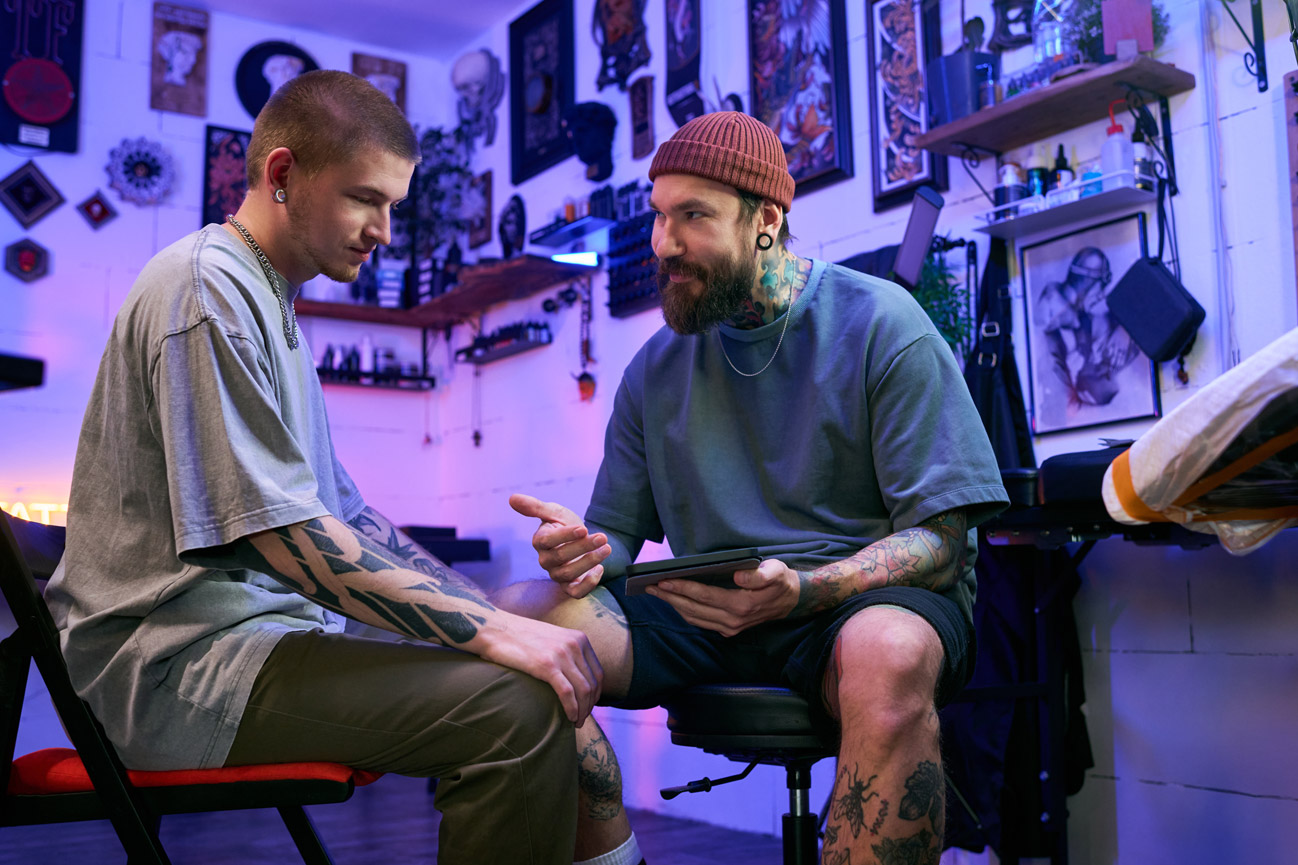
The best tattoo consultations are collaborative. You bring your ideas and references, and your artist brings the experience needed to turn those ideas into something that works on your body.
Why Trusting Your Artist Matters
It’s easy to become attached to an AI-generated image when it seems to capture exactly what you’ve been imagining. You can keep changing the prompt until you get something that feels perfect, which can make it tempting to assume the image should be reproduced exactly as it appears.
A tattoo artist sees the design differently because they are thinking about what happens after the image leaves the screen.
They are looking at how the design fits your body, how the elements work together at the size you’re considering, and whether the details will still make sense after the tattoo has healed. They can also recognize problems that may not be obvious to someone who doesn’t tattoo, such as areas where lines are too close together or details that won’t translate well at a smaller scale.
That knowledge is one of the reasons choosing an artist matters so much in the first place.
If you trust an artist enough to put permanent artwork on your skin, it makes sense to trust their professional judgment when they tell you that something needs to change.
AI Can Be a Tool, Not the Tattoo Artist
There is room for AI in the creative process. Using an AI tattoo generator to explore an idea doesn’t automatically take away from the artistic process, especially when the image is being used as a reference to communicate with an artist.
The problem comes when the generated image is treated as a finished tattoo design and the artist is expected to reproduce it without question.
A tattoo requires decisions that happen in the real world. The artist has to work with your anatomy, your skin, the placement, the size of the design, the technical limitations of tattooing, and the way the artwork will heal over time.
AI can help you figure out what you want to communicate. Your artist is the person who can determine how to make that idea work as a tattoo.
Tattooing Is Still a Craft
Technology will continue to influence the way people create artwork, find inspiration, and develop ideas. AI is likely to become an even bigger part of the creative process, and tattooing won’t be completely separate from that shift.
The physical craft of tattooing, however, still requires a person with the skill and experience to work directly with skin. The machine, the needle, the ink, the placement, the pressure, the movement, and the design all have to come together in real time.
There is no undo button once the needle touches your skin.
That is part of what makes tattooing different from creating an image on a screen. The artist has to make real-time decisions and adapt to the person in front of them, and those skills come from years of practice.
AI-generated imagery can be impressive, but tattooing involves far more than creating an impressive image.
Final Thoughts: AI Tattoo Design, why Your Tattoo Artist still matters
AI tattoo designs can be a helpful way to explore an idea, especially when you are struggling to put a concept into words or find the right reference image. There is nothing wrong with bringing that image to your tattoo artist and using it as part of the conversation.
Just remember that the image is the beginning of the design process, not necessarily the finished tattoo.
Your artist understands how to take an idea and make it work on actual skin. They know when a design needs more space, when details need to be simplified, how the placement will affect the composition, and what will help the tattoo continue looking good as it heals and ages.
Bring the references. Explain what you like. Be honest about what matters to you.
Then give your artist room to do what they’ve spent years learning to do.