American Traditional Tattoos
If you’ve ever walked into a tattoo shop, you’ve seen them.
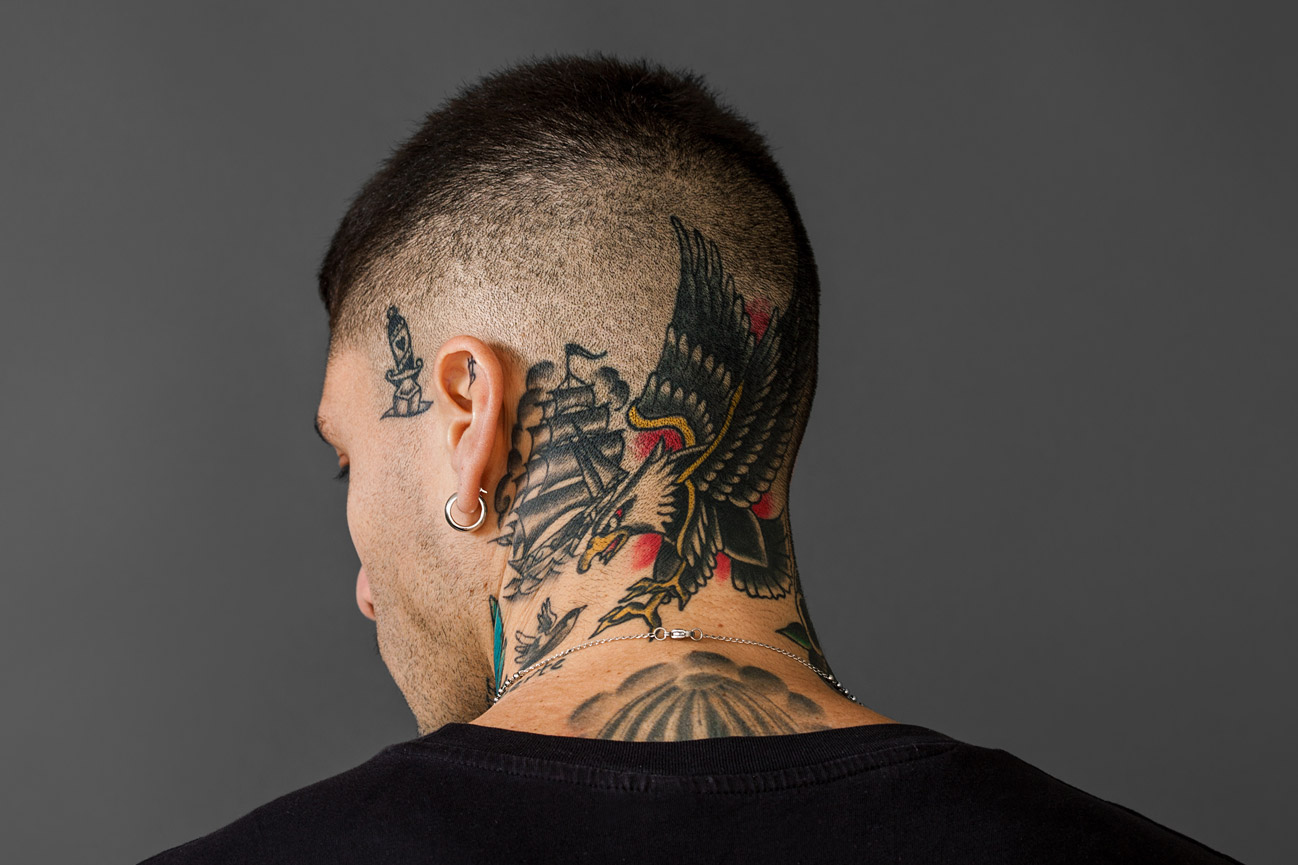
A fierce panther. A bald eagle with its wings spread. A clipper ship sailing through rough seas. A rose paired with a dagger. Even if you’ve never heard the term American traditional tattoo, you’ve probably recognized these designs immediately. They’re some of the most iconic images in tattooing, and they’ve remained popular for more than a century.
That’s pretty impressive when you think about how much tattooing has changed.
Styles like realism, watercolor, fine line, and blackwork have all found their place over the years, but American traditional tattoos have never really gone out of style. Walk into almost any reputable tattoo shop today and you’ll still find classic flash hanging on the walls right alongside custom artwork.
So what makes this style different? Why has it lasted for generations while so many trends have come and gone?
The answer has less to do with nostalgia than you might think. American traditional tattooing was built on solid fundamentals. Every design choice, from the bold outlines to the limited color palette, served a purpose. The result was artwork that not only looked great when it was fresh but continued to hold up as the tattoo aged.
What Makes an American Traditional Tattoo?
At first glance, American traditional tattoos look simple, but that’s exactly what makes them so effective.
The thick black outlines give each design structure and help it stay readable as the ink naturally settles in the skin over time. Instead of relying on tiny details that can soften with age, traditional tattoos use strong shapes and clean compositions that remain recognizable for decades.
Color is another defining feature. Rather than using dozens of shades or smooth gradients, traditional artists worked with a straightforward palette of reds, yellows, greens, blues, and black. These colors created bold contrast, making the artwork easy to read from a distance and helping it stand the test of time.
The imagery became just as recognizable as the technique itself. Eagles, panthers, swallows, snakes, anchors, daggers, roses, clipper ships, and pin-up girls weren’t chosen at random. Many of these designs carried personal meaning for the people wearing them, especially sailors and military servicemen who helped shape tattoo culture in the United States.
Where the Style Began
American traditional tattooing grew alongside America’s ports in the late 1800s and early 1900s. Sailors traveled the world, collecting tattoos that marked major milestones, long voyages, or memories of home. A swallow could represent thousands of miles traveled at sea. An anchor symbolized stability. A clipper ship reminded its wearer of a life spent crossing oceans.
As tattooing became more popular, artists began painting flash sheets to display on the walls of their shops. These weren’t simply decorations or advertisements. They were collections of designs that artists knew worked well on skin.
Flash sheets allowed clients to choose a design with confidence, and they helped preserve the visual language of tattooing from one generation of artists to the next. Even today, many tattooers study vintage flash to better understand composition, line weight, and color balance.
One of the biggest reasons American traditional tattoos have lasted so long is that they were designed with longevity in mind. The goal wasn’t to create the most detailed tattoo possible. It was to create a tattoo that would still look strong years later.
That philosophy is still one of the best lessons modern tattooing has to offer.
The Artists Who Built the Foundation
American traditional tattooing wasn’t created by one person. It evolved through generations of artists who refined techniques, shared ideas, and pushed one another to improve.
His influence reached countless artists, including one who would help connect American tattooing with another centuries-old tradition.
That artist was Don Ed Hardy.
Don Ed Hardy and the Next Chapter of American Traditional Tattooing
By the time Don Ed Hardy entered the tattoo industry in the late 1960s, American traditional tattooing was already well established. Artists like Sailor Jerry, Bert Grimm, and countless others had built a strong foundation rooted in bold designs, technical skill, and respect for the craft.
Hardy admired that tradition, but he also believed tattooing deserved to be recognized as a legitimate art form.
Unlike many tattoo artists of his time, Hardy had a background in fine art. He earned a Bachelor of Fine Arts from the San Francisco Art Institute and spent years studying drawing, painting, and printmaking before deciding to pursue tattooing full-time. Rather than seeing those two worlds as separate, he believed they could strengthen one another.
After corresponding with Sailor Jerry for years, Hardy eventually apprenticed under him. Sailor Jerry recognized Hardy’s curiosity and encouraged him to keep learning, not just from American tattooing but from artists around the world. That advice would eventually take Hardy somewhere few Western tattoo artists had gone before.
Looking to Japan
In 1973, Hardy traveled to Japan to study under the tattoo master Horihide. At the time, Japanese tattooing had centuries of history behind it and was built on a completely different approach to composition.
While American traditional tattooing often focused on individual designs, Japanese tattooing treated the body as a complete canvas. Large-scale pieces were carefully planned so every element flowed naturally with the body’s shape. Dragons, koi, tigers, peonies, maple leaves, waves, clouds, and wind bars weren’t simply placed wherever there was empty space. Every part of the design worked together to tell a story and create movement across the body.
For Hardy, the trip wasn’t about replacing American traditional tattooing or bringing Japanese imagery back to the United States. What fascinated him most was the philosophy behind the work.
He saw tattooing as more than a collection of individual designs. It could be a complete composition that respected the body’s natural anatomy while still honoring the traditions that came before it.
Bringing Those Lessons Home
When Hardy returned to the United States, he didn’t stop tattooing eagles, roses, or panthers. Instead, he combined the technical discipline of American traditional tattooing with the artistic approach he had studied in Japan.
That influence can still be seen today.
Large-scale sleeves, back pieces, and bodysuits are now common in tattoo shops across the world. Artists spend hours planning how each piece connects to the next instead of treating every tattoo as a completely separate design. Background elements help tie compositions together, and clients often work with artists to create custom pieces that tell a larger story.
While Hardy certainly wasn’t the only artist contributing to that shift, he played an important role in showing that tattooing could continue evolving without abandoning the traditions that built it.
Why American Traditional Still Inspires Artists Today
Even with so many tattoo styles available today, American traditional remains one of the most respected.
That’s because the style teaches fundamentals that apply to every form of tattooing. Strong linework, balanced composition, readable designs, and tattoos that age gracefully aren’t trends. They’re the building blocks of good tattooing.
Many artists who specialize in realism, Japanese tattooing, neo-traditional, black and grey, or illustrative work still study traditional tattoos because they provide lessons that never go out of style.
In many ways, American traditional tattooing has become the foundation that modern tattooing continues to build on. Every generation adds its own perspective, but the principles remain the same: create tattoos with intention, respect the craft, and make artwork that’s meant to last.
Why American Traditional Tattoos Are Still So Popular
Tattooing has changed dramatically over the last hundred years. New machines, new pigments, and entirely new styles have expanded what’s possible, but American traditional tattooing has never lost its place.
Part of that comes down to good design. Bold linework, solid color, and balanced compositions have always held up well on skin. These tattoos were designed with longevity in mind, and that’s still one of the biggest reasons artists continue recommending them today.
The style also carries a sense of history. Every eagle, rose, panther, swallow, or clipper ship connects back to generations of tattoo artists who helped shape the industry. While each artist develops their own approach, those classic designs continue to inspire new work and remind us where modern tattooing began.
American traditional tattooing has also influenced countless other styles. Artists specializing in Japanese tattooing, neo-traditional, black and grey, realism, and illustrative work still rely on many of the same fundamentals that made traditional tattoos successful in the first place. Strong composition, confident linework, and tattoos designed to age well never go out of style.
A Style That Continues to Inspire: American Traditional Tattoos
American traditional tattoos have remained a cornerstone of tattooing for more than a century because they’re built on craftsmanship. The style has continued to grow alongside the industry, but its foundation has always stayed the same. Clean lines, balanced designs, and artwork created with intention have never stopped being relevant.
Artists like Sailor Jerry and Don Ed Hardy each left their mark in different ways. One helped define and refine American traditional tattooing, while the other introduced ideas that expanded what tattooing could become. Their work continues to influence artists around the world and serves as a reminder that respecting tradition and continuing to learn can exist side by side.
If American traditional tattooing has caught your attention, take some time to explore the artwork, learn the history behind the designs, and think about the story you want your own tattoo to tell.
When you’re ready to bring that idea to life, the artists at Platinum Ink are here to help. Stop by the shop, look through our flash, or schedule a consultation to create a piece that reflects your style while honoring one of tattooing’s most enduring traditions.