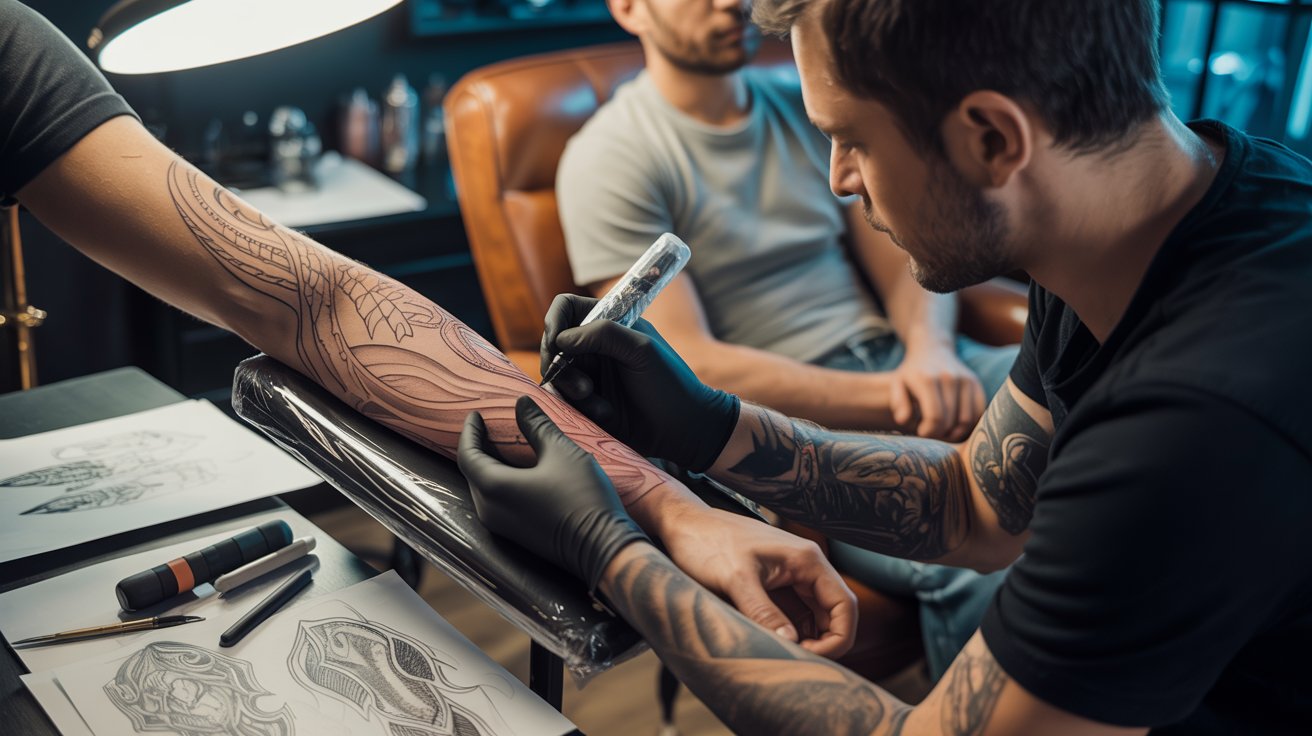
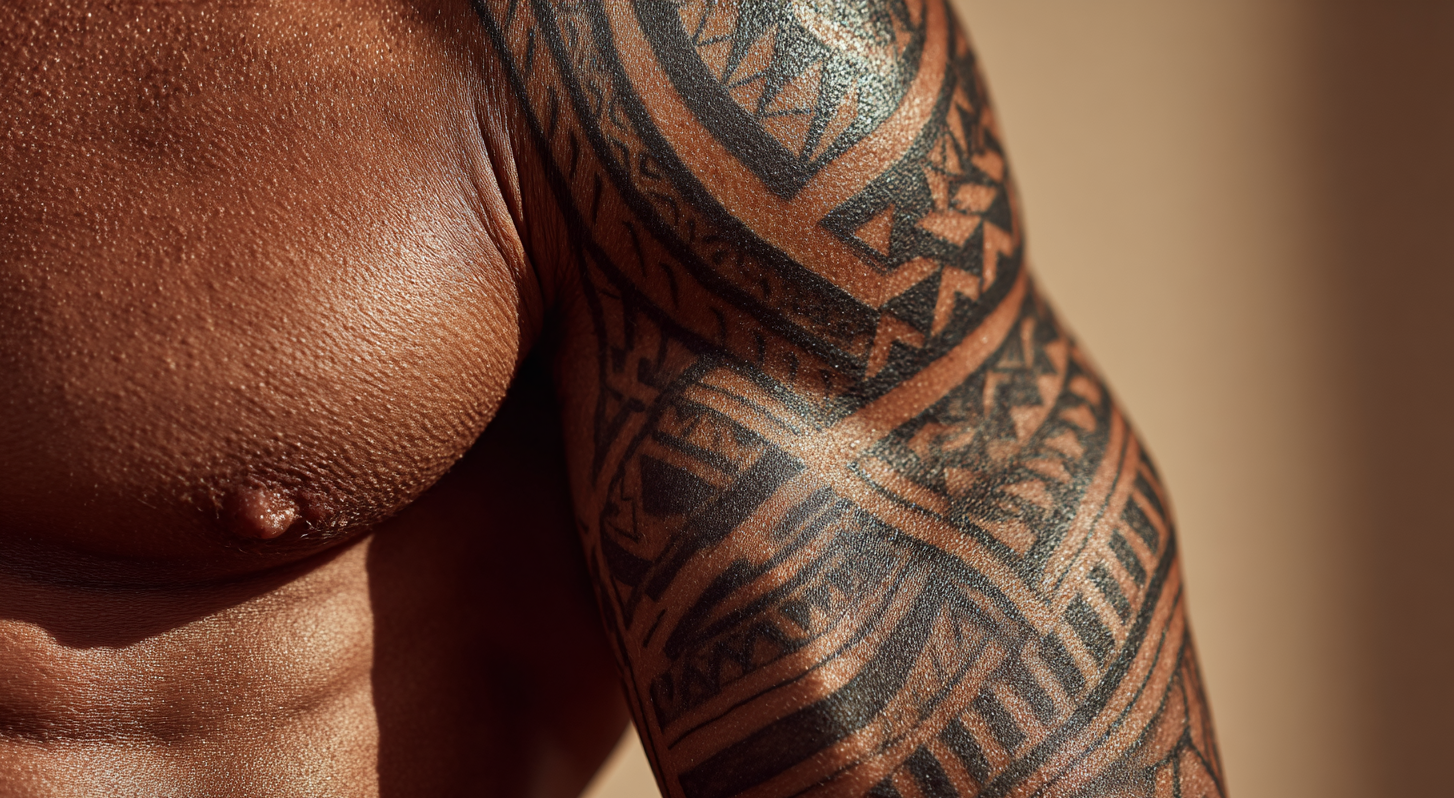
If you’ve been hitting the gym hard and you have a tattoo, or you’re planning to get one, this question has probably crossed your mind. And honestly, it’s a fair one.
The short answer: most tattoos hold up just fine with normal muscle gain. But there’s more to it than that, especially depending on where your tattoo is placed and how fast you’re growing. At Platinum Ink Tattoo & Body Piercing, we get asked about this a lot, so we’re breaking it all down here.
Let’s get into what actually happens to your ink when your body changes.
What Really Happens to a Tattoo When You Build Muscle?
Tattoo ink lives in the dermis, the deeper layer of your skin that contains collagen and elastin. Muscle tissue sits below that, in a completely different layer. So when your muscles grow, they’re not directly pulling on the ink itself.
What they are doing is gradually expanding the skin above them.
When muscle gain is gradual, the dermis stretches slowly along with the rest of your body. The collagen and elastin in that layer adapt through a natural process called remodeling, and the tattoo scales proportionally. Many people actually find their tattoos look better after building muscle, because the design fills out over a more defined, tighter canvas.
When muscle gain is rapid or extreme, that’s when things can get complicated. Fast stretching can strain the dermis before it has time to adapt, which can lead to stretch marks. If stretch marks form directly on or through a tattoo, they can blur or fade parts of the ink.
That said, stretch marks from natural gym progress are not common. This is much more of a concern with very aggressive bulking or rapid weight changes.
Which Body Parts Are Most at Risk?
Not all tattoo placements respond the same way to muscle growth. Some areas are naturally more resilient. Others expand quite a bit with training and deserve a little extra thought before you commit.
Lower-Risk Areas (More Resilient for Lifters)
These spots tend to hold up well even as your body changes:
- Forearms
- Upper chest
- Upper back and shoulder blades
- Calves and lower legs
- Ribs
These areas have higher skin tension and tend to stretch more evenly, so tattoos here are less likely to shift or distort even with consistent training.
Higher-Risk Areas (Worth Discussing With Your Artist)
These zones expand more noticeably with hypertrophy and are more prone to stretch marks during rapid growth:
- Inner biceps
- Pecs and chest (especially with heavy pressing)
- Shoulders (deltoid growth can shift placement)
- Thighs
- Armpits and sides
This doesn’t mean you can’t get tattooed in these spots. It just means the conversation with your artist matters even more.
Gradual Gains vs. Rapid Gains: Does the Speed Matter?
Yes, it does.
Gradual muscle building over months or years gives your skin time to keep up. The dermis stretches evenly and the tattoo expands proportionally. For the vast majority of natural lifters, this means no noticeable distortion at all.
A 2025 report from Stay Local Tattoo noted that significant muscle gain in arms, shoulders, and thighs can cause slight stretching if the change happens rapidly, but gradual changes typically produce minimal, often unnoticeable effects.
Xpain Tattoo’s 2025 lifter’s guide put it well: “In most cases, the effect isn’t distortion; it’s enhancement. As the muscle grows, it ‘fills out’ the tattoo, making the canvas smoother and the design more prominent.”
The risk really comes down to how extreme the change is and how fast it happens. If you’re adding 20 to 30 pounds of muscle gradually over a few years of training, your tattoo is very likely to look just as good, if not better.
If you’re planning a very aggressive bulk or have questions about how your specific goals might affect your current ink, the best move is to talk to a professional. If you’re not sure where to start, Platinum Ink offers consultations where we can look at your placement and give you real, honest feedback.
Should You Get Tattooed Before or After Building Muscle?
This is one of the most common questions we hear from gym regulars.
There’s no single right answer, but here’s a practical way to think about it:
If you’re early in your fitness journey and planning to make significant changes to your body composition, it may be worth waiting, or at least being very strategic about placement. Getting tattooed on the inner bicep before a major bulk, for example, introduces more unpredictability than placing it on your forearm or upper back.
If you’re already at a stable size or making slow, steady progress, you’re likely fine to go ahead. Your skin is already adapted to your current muscle mass, and gradual future gains are unlikely to cause noticeable changes.
The honest truth: there’s no perfect time that guarantees zero change. Bodies evolve. That’s just life. What matters most is choosing smart placement and working with an artist who understands your goals.
What Tattoo Artists Actually Recommend for Lifters
Tattoo professionals consistently give the same advice: tell your artist about your fitness goals before you book.
This isn’t just a courtesy. It genuinely changes what placements and designs make sense for your body. A great artist can work with your muscle structure, recommend spots that will complement your physique as it grows, and design artwork that holds up better over time.
A few things that experienced artists keep in mind for clients who lift:
- Design scale matters. Larger, bolder designs with thicker line work tend to hold up better over time than extremely fine line detail in high-movement areas.
- Placement relative to muscle belly is key. Placing a design slightly off-center from where peak muscle growth occurs can make a big difference.
- Touch-ups are normal and effective. If minor changes do occur years down the line, a good touch-up can bring the tattoo right back. This is standard practice, not a failure.
At Platinum Ink Tattoo & Body Piercing, we’ve been working with Austin clients since 2002. We know how important it is to think long-term about your ink. That’s especially true when your body is still changing.
What If Your Tattoo Has Already Changed?
If you’ve noticed some slight blurring or shifting in an existing tattoo after a period of significant muscle gain, don’t panic.
Minor changes are common and often fixable. A touch-up session with an experienced artist can typically address fading, slight blurring, or loss of crispness in the line work. Results vary by individual, skin type, and the extent of the change, but in most cases there’s a solid path forward.
If you’re unsure whether what you’re seeing is distortion from muscle gain or just normal fading over time, the best thing to do is bring it into the shop. An artist can assess it in person and tell you what’s actually going on.
For anyone in the Austin metro area thinking about their options, the team at Platinum Ink Tattoo & Body Piercing is happy to take a look and give you an honest opinion.
Your Tattoo and Your Fitness Goals Can Coexist
Here’s the bottom line: building muscle does not have to mean ruining your tattoo. For most people training naturally and progressing at a reasonable rate, the ink moves with the body without any serious distortion.
The key is planning. Knowing which areas are more resilient, choosing designs that work with your body type, and having an open conversation with your artist before you commit. All of that goes a long way.
At Platinum Ink Tattoo & Body Piercing, we believe great tattoo work starts with a real conversation. Whether you’re a longtime lifter or just starting your fitness routine, we’re here to help you think through placement, design, and timing so your tattoo stays something you’re proud of for years to come.
Come in, talk to our artists, and let’s figure out what works for your body and your goals.
Frequently Asked Questions
Do tattoos stretch when you gain muscle? Generally, no. When muscle gain is gradual, the skin adapts and the tattoo scales with it. Rapid or extreme growth carries a higher risk of stretch marks that can affect the ink, but this is uncommon for natural lifters.
What’s the best tattoo placement for someone who lifts? Forearms, upper back, shoulder blades, upper chest, and calves are considered more resilient placements for people who train regularly. These areas expand less and have stronger skin tension.
Will building muscle make my tattoo look better or worse? For many people, it actually looks better. As muscles develop, the skin becomes tighter and more defined, which can make designs appear more prominent and vibrant.
Should I wait until I’m done building muscle to get a tattoo? Not necessarily. If you’re already at a stable size or building gradually, there’s no reason to wait. If you’re planning a very aggressive bulk or are early in a major body transformation, strategic placement is worth discussing with your artist first.
Can a stretched or distorted tattoo be fixed? In most cases, yes. Touch-up sessions with an experienced artist can address fading, blurring, or minor distortion. The results vary by individual, so an in-person assessment is the best way to understand your options.
Does skin elasticity affect how tattoos hold up with muscle gain? Yes. Skin elasticity, which is your skin’s ability to stretch and return to its shape, plays a real role. Younger skin and skin that’s maintained with proper hydration tends to adapt better to body changes over time.
Are there Texas regulations about tattoo consultations? Texas does not have regulations specifically addressing muscle gain and tattoos. Standard studio licensing and artist certification apply across the state. At Platinum Ink Tattoo & Body Piercing, we follow all Texas Department of State Health Services guidelines and include thorough consultations as part of our process.