Introduction to Tattoo Consultation
Booking a tattoo consultation should feel exciting. You have an idea you are ready to commit to, you have chosen a shop you trust, and now you get to talk through the details with a professional. A consultation is where your idea gets the structure it needs to move forward with confidence. It is the moment your artist learns what you like, what you do not like, and how you want this tattoo to look once the design is finished.
Your artist wants the same result you do, a tattoo you are happy with every single day. To make that happen, they need clear information from the start. Communication, reference photos, and a few thoughtful details are what make the design process smooth, efficient, and accurate.
Think of a consultation as teamwork. You bring the concept and the priorities that matter most to you. Your artist guides you on what will make the tattoo look clean, balanced, and long lasting on skin. When both sides come prepared, you walk into your appointment confident about what is coming next.
Tattoo Consultation Tips from Professional Artists
Before your appointment, gather the basics that give your artist a clear understanding of the direction you want to go. Bring one to three reference photos that show the overall style you like. Add a photo of the exact area you want tattooed so your artist can see how the design will work with your skin and any tattoos you already have nearby. Think through sizing in inches instead of using vague terms like small or medium. Clear sizing helps determine how much detail is possible and how the design will age. It also helps to know your availability and your general budget, even if that budget has some flexibility.
Consultations are not about telling your artist how to draw. They are about setting everyone up for success from the beginning. You do not need a fully polished idea, just enough information to start an informed and productive conversation.
Choosing the Right Reference Photos
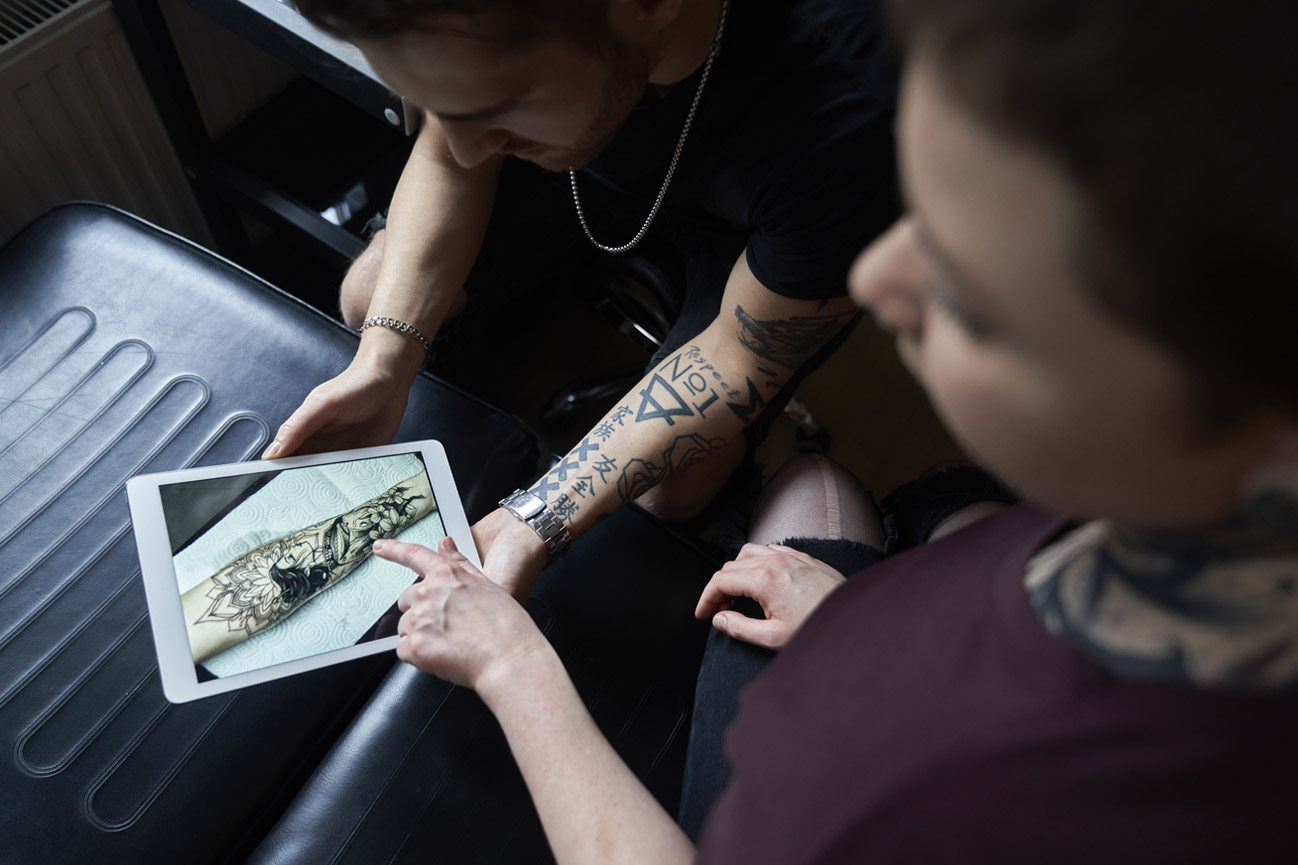
Reference photos act as a visual guide. They help your artist understand what you mean when you describe the style you are drawn to. Try to choose images that feel consistent with each other so the direction is cohesive and easy to read. Helpful references show line weight, shading style, and the overall aesthetic you prefer. They can also demonstrate how much open skin you like in a design or how bold you want the details to feel.
Skip images where the quality is too low to clearly see the linework. Avoid heavily filtered screenshots that change the true look of the tattoo. It is also important to remember that each tattoo you see online was designed to fit someone else’s anatomy. You are not asking your artist to recreate a tattoo exactly as it exists. You are giving them context so they understand the direction you want to explore.
Talking About Size, Placement, and Flow
Placement plays a major role in the design process. It affects how bold the tattoo feels, how it reads from different angles, and how it holds up over time. A design that feels subtle on the thigh may look very noticeable on the forearm. Placement also influences aging, especially in areas with more movement, stretching, or friction.
Bring a clear photo of the area with good lighting so your artist can see how the design will sit on your body. They may suggest adjusting the placement slightly so it follows your natural curves or flows better with existing tattoos. Trust that guidance. Artists think about movement, balance, and longevity in ways that are not always obvious when looking at reference photos alone.
Size matters just as much. A tattoo that is two inches tall will not hold the same level of detail as one that is five inches tall. If your idea includes tiny lettering or small facial features, your artist may recommend sizing up so the lines do not blur or merge together over time. Come in with a general size in mind but stay open to feedback. That flexibility almost always improves the final result.
How Tattoo Pricing Usually Works
Pricing depends on time, complexity, and the level of detail involved. Smaller tattoos with simple elements are often quoted at a set price. Larger pieces or designs that require layering, shading, or multiple sessions are usually priced by the hour because they take more time to build correctly. Some artists charge different hourly rates for different styles based on difficulty and technical demands.
During your consultation, your artist will estimate how many hours your tattoo is likely to take. They consider the size in inches, the amount of detail you want, and whether adjustments are needed to work around existing tattoos or anatomical features. If you have a specific budget you need to stay within, share that early. It helps the artist make smart design suggestions that stay realistic without sacrificing quality.
What Happens During a Tattoo Consultation
Every artist handles consultations a little differently, but most follow a similar structure. You review your references together, talk through size and placement, and discuss any changes the artist recommends to make your idea work better on skin. They may take photos of the area or create a rough layout to show how the design will flow.
If your tattoo will cover a larger area, your consultation may include planning for multiple sessions and healing time between each appointment. Simpler tattoos can sometimes be fully planned through email without an in-person visit. Either way, a consultation should feel like preparation, not pressure. The goal is clarity, comfort, and confidence.
What Not to Do at a Tattoo Consultation
It is easy to get excited when talking about a new tattoo, but certain habits can make the process more difficult than it needs to be. Try to avoid showing up with a large collection of images that all represent different styles. If your references range from delicate fine line to bold blackwork, your artist will not know which direction to focus on. Narrowing your style choices ahead of time keeps the conversation focused.
Copying another artist’s tattoo exactly is something to avoid. Tattoos are designed to flow with a specific body, and exact duplicates often end up feeling forced. If you love a piece you saw online, bring it as a style reference and allow your artist to redesign it so it fits you properly. Giving them creative control almost always results in a stronger tattoo.
Try not to change your idea repeatedly during the same consultation. Artists are happy to make adjustments and help refine your concept, but constant shifts make it hard to build a design with direction. If something does not feel right, communicate that clearly and let your artist guide you. Staying focused on one cohesive idea leads to the best outcome.
Healing Considerations to Discuss Early
Healing is a key part of the tattoo process, and placement plays a bigger role than many people expect. Areas with frequent movement, friction, or sun exposure can take more effort to heal comfortably and properly. If you have a vacation, work trip, or event coming up, bring it up during your consultation so your artist can help you choose the right timing and placement.
Your artist will walk you through proper aftercare and give you clear instructions on how to heal and take care of your tattoo. Ask how long healing typically takes, which products are recommended, and whether a touch up may be needed once the tattoo settles. Understanding these expectations ahead of time helps your tattoo heal clean and hold its detail over time.
Email Etiquette When Reaching Out to Book
Booking a tattoo consultation should feel exciting. You have an idea you are ready to commit to, you pick a shop you trust, and now you get to talk through the details with a professional. A consultation is where your idea gets the structure it needs. It is the moment your artist learns what you like, what you do not like, and how you want this tattoo to look once the design is finished.
Your artist wants the same result you do, a tattoo you are happy with every single day. To make that happen, they need clear information from the start. Communication, reference photos, and a few simple details are what make the design process smooth and accurate.
Think of a consultation as teamwork. You bring the concept and what matters most to you. Your artist guides you on what will make the tattoo look clean, balanced, and long lasting. When both sides come prepared, you walk into your appointment confident about what is coming next.
Frequently Asked Questions about Tattoo Consultation
Do I need to know the exact design before the consultation?
No. A general concept is perfect. Your artist will help shape it into something that works well on skin.
Can I bring someone with me?
Check with the shop ahead of time. Some allow a friend for support, while others keep consultations one on one to maintain focus.
Will I see the design before my appointment?
Many artists show designs on the day of the appointment to protect their work and avoid excessive revisions. Final adjustments usually happen in person.
How long does a consultation take?
Most consultations last under 30 minutes unless the tattoo is large or complex.
Is the consultation free?
Many shops offer free consultations. A deposit may be required if extensive design work is involved.
Can I change the design after the consultation?
Small adjustments are normal. Larger changes may require another consultation or updated pricing.
What if I am unsure about placement
Your artist can help you choose a placement that suits your anatomy, works with existing tattoos, and ages well.
Should I bring printed or digital references?
Either option works. Digital is often easier, but make sure the images are clear and high quality.
Ready to Start Your Tattoo Conversation
A strong consultation sets the foundation for a tattoo you will be happy with long term. Gather your references, think through size and placement, and reach out when you are ready. Platinum Ink in Austin, Texas has been poking people pretty since 2002, with a focus on clear communication, thoughtful design, and tattoos that hold up over time.
Book your consultation at Platinum Ink and lock in your next tattoo.