If you’ve been searching for your next lip piercing and keep seeing “angel fangs” and “angel bites” used as if they mean the same thing, you’re not alone. The confusion is real, and it’s everywhere online. But here’s the short answer: they are not the same piercing.
At Platinum Ink Tattoo & Body Piercing, we get this question a lot. And getting clear on the difference before booking your appointment can save you a lot of confusion, especially when placement, jewelry, and healing look very different between the two.
So let’s break it down, properly.
What Are Angel Bites?
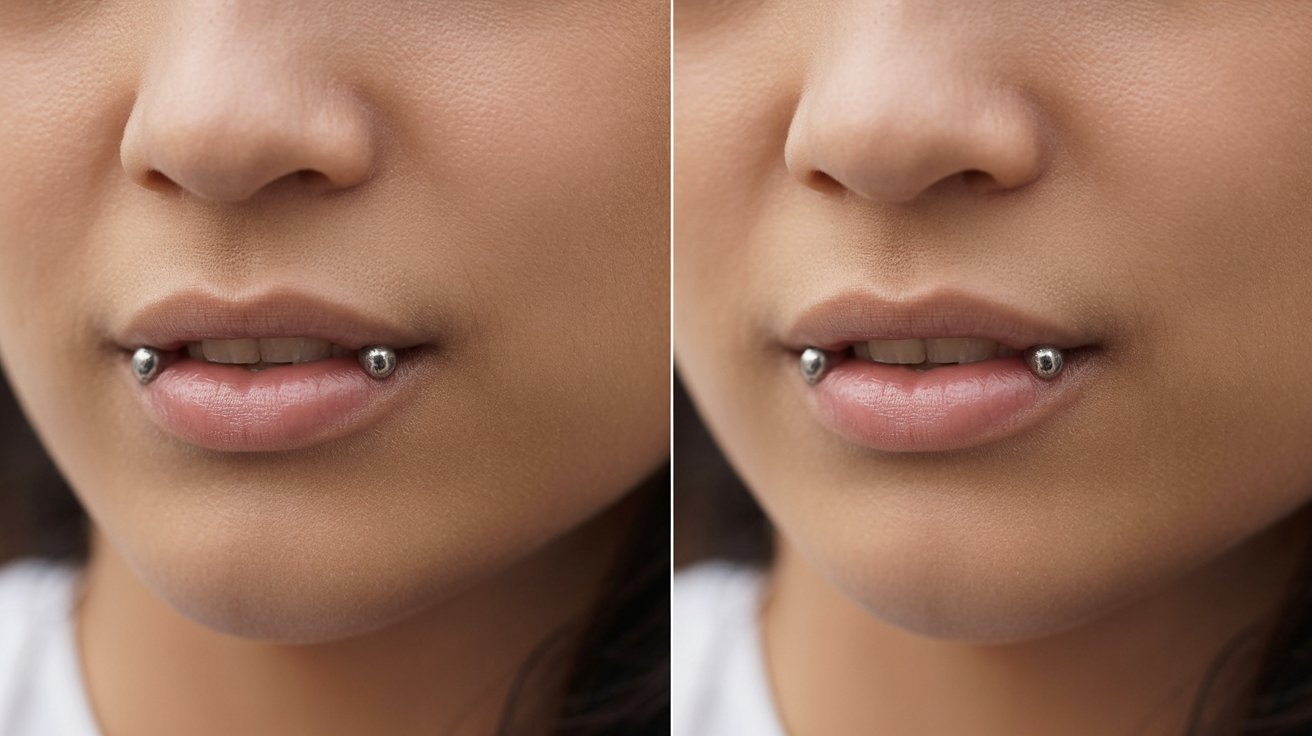
Angel bites are a pair of piercings placed above the upper lip, one on each side. One is a Monroe piercing (upper left, near where Marilyn Monroe’s beauty mark sat), and the other is a Madonna piercing (upper right).
Here’s what makes angel bites distinct:
- They sit on the surface of the skin above the lip
- They do not pass vertically through the upper lip
- The jewelry typically used is a labret stud — a flat back with a decorative front piece
- They enter from the outside and, depending on placement, the flat back sits just inside the lip
They create a symmetrical, doll-like look that’s been popular for years. Many people describe them as delicate or feminine in appearance.
What Are Angel Fangs?
Angel fangs are a different piercing entirely. They’re a set of two vertical upper lip piercings, placed symmetrically on either side of the philtrum (the groove between your nose and upper lip).
What makes them unique:
- The jewelry passes vertically through the upper lip
- Entry is through the top of the lip, and exit is near the lip line
- The only appropriate jewelry is a curved barbell
- The visual effect mimics vampire fangs, which is where the name comes from
Angel fangs are essentially a paired version of the vertical labret concept, but positioned on either side of center rather than directly below the philtrum. They’re growing in popularity on TikTok, where the #angelfangs tag has been trending consistently into 2026, with a strong crossover into the “vampire aesthetic” community.
Why Do People Mix Them Up?
The confusion mostly comes from social media. The term “angel fangs” gets used loosely outside of professional piercing circles, sometimes referring to angel bites and sometimes to the actual vertical piercing. It’s worth knowing which one you actually want before walking into any studio.
One way to remember it: angel fangs go through the lip. Angel bites don’t.
Angel Fangs: Anatomy Comes First
This is one of the most important things to understand about angel fangs specifically. They are anatomy-dependent, more so than most lip piercings.
To place these safely, a professional piercer needs to see:
- A defined ridge on the upper lip
- Enough tissue depth to accommodate the jewelry
- A lip shape that can support the piercing without the jewelry sitting too low (which can cause serious dental issues)
A lot of people want their angel fangs aligned with their canine teeth. That’s a completely understandable request, but the upper lip tends to thin out toward the sides, which may not leave enough tissue for a safe, lasting placement. A skilled piercer will adjust placement inward to protect your long-term results, even if that differs slightly from your original vision.
The bottom line: no online image or tutorial can tell you whether your anatomy is right for angel fangs. That requires an in-person assessment with a professional. If you’re curious about your suitability, reach out to a studio that offers consultation before committing.
Jewelry: What Goes In Each Piercing
For Angel Fangs
The only appropriate jewelry for angel fangs is a curved barbell. Because the piercing runs perpendicular to the tissue, a straight barbell puts too much pressure on the tissue and can cause irritation or migration. Hoops are also not recommended since they can snag and cause problems during healing.
End styles vary widely, from small beads to decorative discs. Spiked ends (which give the piercing its fang look) are best saved until after the piercing is fully healed — they’re more likely to catch on things during the healing window.
For Angel Bites
Angel bites are typically fitted with labret studs. These have a flat, fixed back and a threaded or push-fit accessory on the front that sits visible on the surface.
Materials: What the APP Recommends
The Association of Professional Piercers (APP) is the leading industry authority on piercing safety in the United States. They have clear guidelines on acceptable jewelry materials for initial piercings. These apply to both angel fangs and angel bites:
- Implant-grade titanium (Ti6Al4V ELI, ASTM F-136 compliant) — ideal for people with nickel sensitivity, and can be anodized in different colors
- Surgical steel — only specific biocompatible grades qualify: ASTM F-138 or ISO 5832-1 compliant
- 14k or higher gold — yellow, rose, or white gold is appropriate if it’s nickel-free and cadmium-free. Gold above 18k is too soft. Gold-plated, gold-filled, or vermeil jewelry is not acceptable for a fresh piercing
- Niobium or platinum are also acceptable options
Texas-specific note: According to the Texas Department of State Health Services (DSHS), only approved materials can be used for new piercings in Texas. These include surgical implant-grade stainless steel (minimum 316L or 316LVM), solid 14k or 18k gold, niobium, titanium (minimum 6AL4V), or platinum — all properly sterilized and free of nicks, scratches, or irregular surfaces before use.
For pricing on jewelry, we encourage you to contact us directly. Material choices, design options, and studio specifics all factor into cost, and we want to give you an accurate quote for your specific setup.
Healing Time: What to Realistically Expect
For both angel fangs and angel bites, average healing time is 12 to 16 weeks with proper care.
A few things worth knowing:
- Initial surface healing takes roughly 3 to 4 months
- Internal tissue takes closer to 6 months to fully mature
- Angel bites often heal slightly faster because they pass through less lip tissue
- A piercing can feel healed on the outside before it actually is — the tissue heals from the outside in
Aftercare must continue throughout the entire healing period, not just until things look fine on the surface.
Aftercare: What the APP Actually Recommends
We follow APP guidelines for all piercings at Platinum Ink Tattoo & Body Piercing. Here’s what’s recommended based on their official guidance at safepiercing.org:
For the exterior of the piercing:
- Use sterile saline wound wash with one ingredient only: 0.9% sodium chloride
- Rinse 1 to 3 times daily
- Do not rotate or move the jewelry — this is outdated advice that can actually irritate the piercing
For the oral/lip component (where relevant):
- Rinse with a mild, non-iodized sea salt solution or alcohol-free, antimicrobial mouthwash
- Rinse 4 to 5 times daily during healing
What to avoid:
- Bactine, pierced ear care solutions, and any product containing Benzalkonium Chloride (BZK) — these are not meant for long-term wound care
- Making your own salt solution at home — this commonly results in a mixture that’s too concentrated, which can over-dry the piercing and slow healing
- Over-cleaning, which can delay healing just as much as neglecting it
The APP also notes that piercings often feel healed before they are, because healing happens from the outside in. Even when things feel fine, the internal tissue may still be fragile. Stay consistent with your aftercare until the full healing window is complete.
Risk Factors: What to Know Before You Decide
Migration and Rejection
Angel fangs carry a higher risk of migration and rejection than many other lip piercings, due to their placement through lip tissue. Migration is when the jewelry gradually moves closer to the skin’s surface. Rejection happens when the piercing moves all the way to the surface.
According to the APP’s official troubleshooting guidance, a piercing should have at least 5/16 of an inch (almost 8mm) of tissue to remain viable. If you notice the jewelry moving or the skin between the openings thinning, it’s important to contact your piercer rather than wait.
Per Medical News Today, if a piercing appears to be migrating, the jewelry should be removed and a piercer contacted promptly. Leaving jewelry in when migration is occurring increases the risk of scarring, which can permanently prevent a new piercing in the same spot.
Dental Health
This is one area where angel fangs actually have an advantage over angel bites:
- Because angel fangs are vertical, the jewelry sits entirely outside the mouth
- The metal never contacts your teeth or gums directly, which significantly reduces the risk of gum recession
Angel bites, by contrast, have flat backs that sit inside the mouth. If placement is too low, there’s a greater potential for gum irritation over time.
That said, both styles carry their own risk profiles. The only way to get an accurate read on what’s right for your anatomy is through an in-person consultation with a professional piercer.
Can a Minor Get Angel Fangs or Angel Bites in Texas?
Yes, with the right steps. Under Texas Health and Safety Code Section 146.0125 (updated January 2024), minors under 18 can receive body piercings only under these conditions:
- A parent or legal guardian must provide written, notarized consent
- Or the parent or legal guardian must be physically present during the procedure and show evidence of that relationship
- Consent must specify the exact area of the body being pierced
Genital piercings are prohibited for minors entirely, regardless of parental consent.
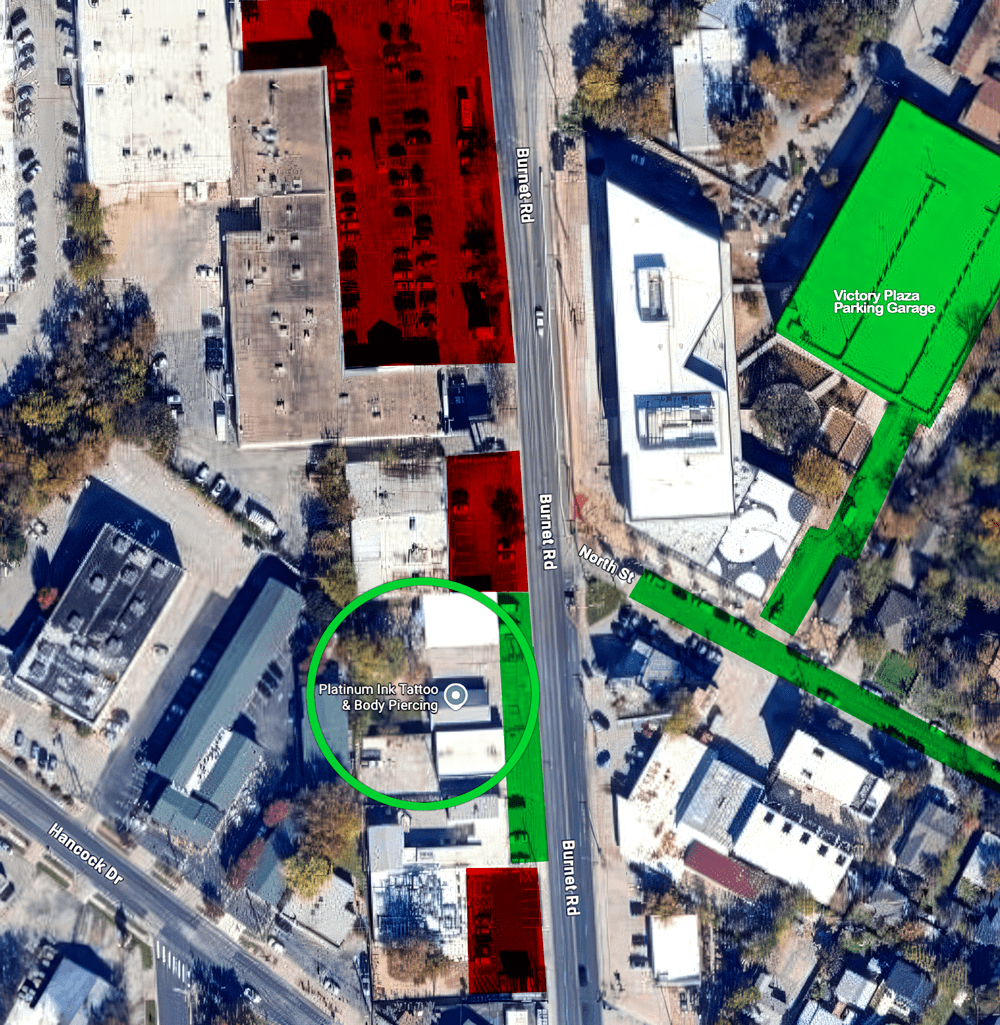
At Platinum Ink Tattoo & Body Piercing in Austin, we take these requirements seriously and follow Texas state law on every procedure.
Studio Requirements in Texas: What You Should Know
Texas has specific enforced standards for all body piercing studios, regulated by the Texas DSHS under Texas Health and Safety Code Chapter 146. Key requirements include:
- All studios must hold a Body Piercing Studio License
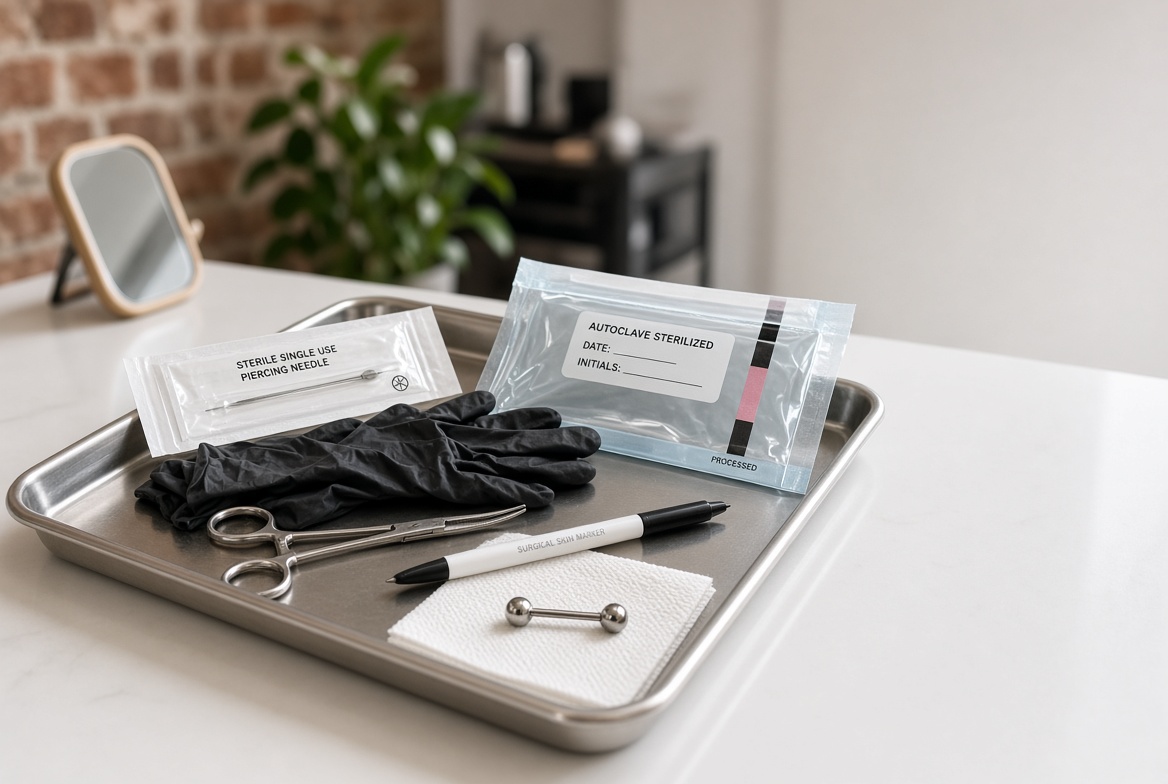
- Equipment must be properly sterilized, with reusable tools run through an autoclave and spore-tested at least once a month
- Single-use, pre-sterilized needles are required for every client
- Piercing guns are prohibited for body piercings due to their inability to be properly sterilized
Texas is one of the more regulated states in the country. There are no nationwide, standardized piercing regulations in the U.S. — standards vary significantly from state to state, and sometimes county to county. If you’re getting pierced anywhere in the country, it’s worth asking your studio directly about their licensing and sterilization practices.
Related Terms You Might Have Seen
Searching for angel fangs or angel bites often surfaces a few related terms. Here’s a quick reference:
| Term | What It Actually Means |
| Monroe piercing | Single upper lip piercing on the left side |
| Madonna piercing | Single upper lip piercing on the right side |
| Vertical labret | A single vertical lip piercing through the lower lip |
| Jestrum | Vertical labret placed through the philtrum area |
| Reverse/inverse angel bites | Angel bite placement, reversed orientation or style variation |
| Kitty bites | Two lower lip piercings, one on each side |
If you’re exploring our professional body piercing services and aren’t sure which of these fits your vision, that’s exactly the kind of conversation we can have at a consultation.
Ready to Book? Here’s How to Move Forward
Knowing the difference between angel fangs and angel bites is the first step. But your anatomy, your healed jewelry goals, and your daily routine all factor into which style is actually right for you.
At Platinum Ink Tattoo & Body Piercing, we’ve been serving the Austin metro since 2002. Our piercers work with you on placement, jewelry material, and aftercare so you’re not guessing through the process. Whether you’re interested in angel fangs, angel bites, or any of our other body piercing options, we’re here to help you make an informed choice before anything is committed to.
Get in touch with us today to book a consultation.
FAQs: Angel Bites vs Angel Fangs
Are angel bites and angel fangs the same piercing? No. Angel bites are two piercings placed above the upper lip (one Madonna, one Monroe) that do not pass through the lip vertically. Angel fangs are two vertical upper lip piercings that pass through the tissue and exit near the lip line.
What jewelry is used for angel fangs? Curved barbells only. Straight barbells and hoops are not appropriate for angel fangs during healing.
How long do angel fangs take to heal? Typically 12 to 16 weeks, though internal tissue may take closer to 6 months to fully mature. Aftercare should continue throughout the full healing window.
Do angel fangs damage your teeth? Because they sit entirely outside the mouth, angel fangs have minimal risk of direct contact with teeth or gums. Angel bites, where the flat back sits inside the lip, carry more potential for gum irritation if placed too low.
Can I get angel fangs if I don’t have the right anatomy? Your piercer will assess your anatomy at a consultation. If your upper lip doesn’t have sufficient tissue or ridge, the piercer may recommend adjusting placement or a different style entirely.
Can a minor get angel fangs in Texas? Yes, with parental consent. A parent or legal guardian must either provide written, notarized consent specifying the piercing or be physically present during the procedure and show proof of their relationship to the minor.
Why do people call them the same thing online? The term “angel fangs” is used loosely on social media outside of professional piercing communities, which creates inconsistency. The professional piercing industry treats them as distinct piercings.How do I know if I need a curved barbell or labret stud? Your piercer will recommend the correct jewelry based on the piercing style. Angel fangs require curved barbells. Angel bites use labret studs.