Introduction to Tattoo Stencils
Walk into a tattoo shop today and you’ll likely see an artist print a stencil within seconds. The design is applied to the skin, adjusted for placement, and approved before the tattoo even begins. It feels like a routine part of the tattoo process, but the tools artists use today are the result of decades of innovation.
Before thermal printers, digital artwork, and stencil solutions, tattoo artists relied on hand-cut stencils, transfer paper, and a surprising amount of patience. Some designs were etched into reusable sheets of plastic by hand. Others were transferred using graphite powder, carbon paper, or early tracing methods. While the technology has changed dramatically, the goal has always been the same: create a clear guide that helps the artist tattoo accurately and consistently.
The history of tattoo stencils offers a fascinating look at how tattooing evolved from a trade built almost entirely by hand into the modern industry we know today.
What Are Tattoo Stencils?
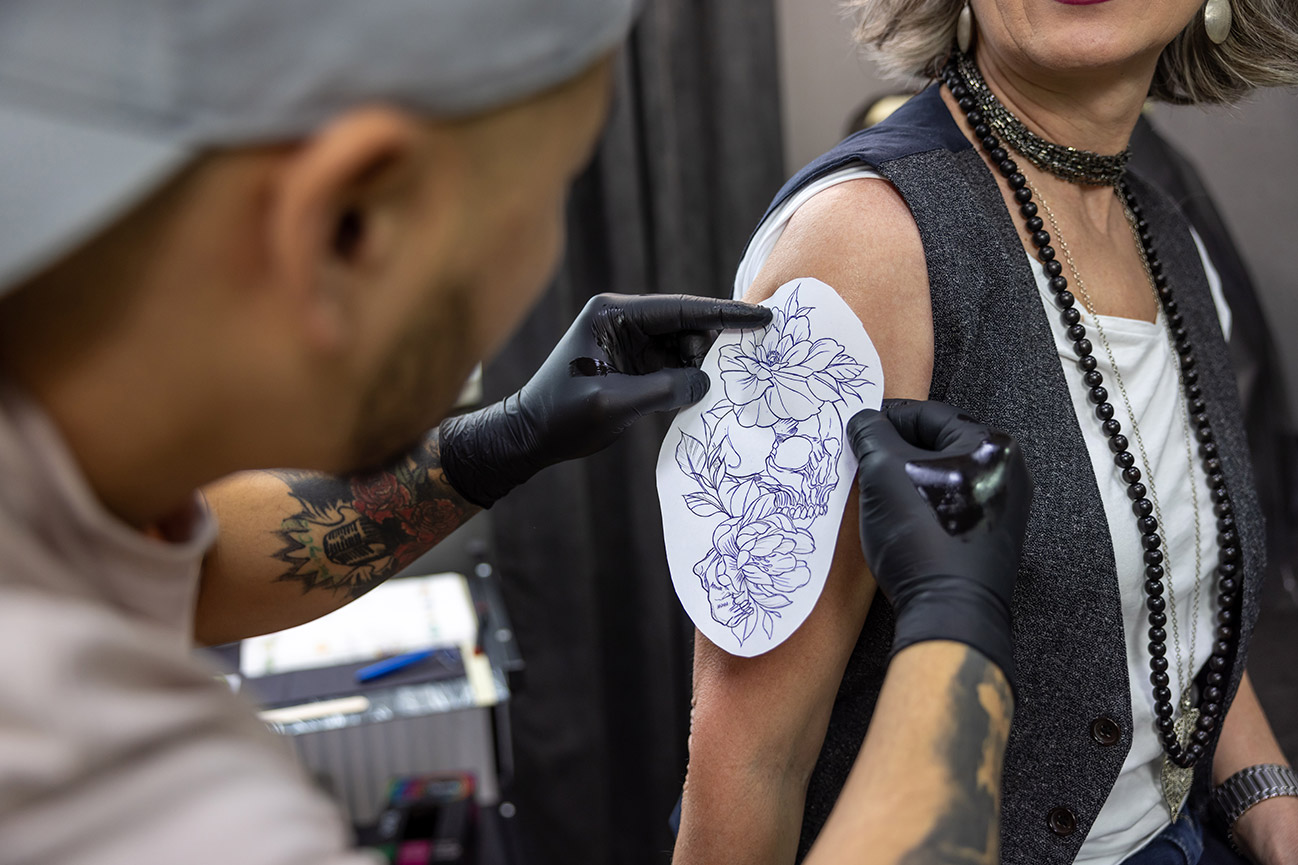
A tattoo stencil is a temporary outline applied to the skin before tattooing begins. It serves as a roadmap for the artist, helping ensure the design is positioned correctly and maintaining consistency throughout the tattoo.
Stencils also give clients the opportunity to approve the placement, size, and orientation of a design before the first line is tattooed. If you’ve ever watched your artist move a stencil around several times before settling on the perfect spot, you’ve seen just how important this step can be.
While some tattoo artists occasionally work freehand for specific projects, stencils remain one of the most valuable tools in modern tattooing. They help create symmetry, improve accuracy, and allow artists to tackle increasingly detailed custom work.
Early Tattoo Transfer Methods
Long before modern tattoo transfer paper existed, artists still needed a way to get designs onto the skin.
Many early tattooers relied on tracing techniques and hand-drawn guides. Some designs were transferred using paper-based methods, while others were drawn directly onto the skin. As tattooing became more commercialized throughout the late nineteenth and early twentieth centuries, artists continued experimenting with ways to create faster and more reliable transfers.
For tattoo shops displaying walls full of flash designs, tracing every image from scratch wasn’t always practical. Reusable transfer systems eventually emerged as a way to save time while maintaining consistency from one tattoo to the next.
The Era of Hand-Etched Acetate Stencils
Before tattoo transfer paper and thermal printers became standard, many tattoo artists relied on reusable stencils made from acetate or celluloid. These thin, transparent sheets of plastic allowed artists to transfer popular flash designs onto the skin without tracing the artwork from scratch every time.
Creating these stencils was a time-consuming process. An artist would place a clear sheet over a flash design and carefully scratch the image into the surface using a sharp tool. Unlike drawing with ink, the design was physically etched into the plastic. Every line had to be created by hand, and detailed designs could take hours to complete.
Many traditional tattoo shops treated stencil-making as part of an apprentice’s education. Spending hours tracing and etching classic designs helped apprentices develop patience, understand composition, and become familiar with the imagery that shaped traditional tattooing.
Once completed, these stencils could be used repeatedly. A popular rose, eagle, panther, dagger, or pin-up design might be tattooed hundreds of times over the years using the same stencil. Before computers and digital files existed, a tattooer’s stencil collection was essentially their design library. Shops often kept large collections of reusable stencils organized alongside their flash sheets, ready to be pulled out whenever a client selected a design.
Graphite Powder, Vaseline, and Early Tattoo Transfers
Making the stencil was only the first step. Artists still needed a way to transfer the design from the plastic sheet onto the skin.
One method used by some tattooers involved rubbing graphite, charcoal, or carbon powder into the etched grooves of the stencil. The excess powder would be tapped or brushed away, leaving pigment trapped inside the scratched lines. A thin layer of petroleum jelly, commonly known as Vaseline, would then be applied to the skin before pressing the stencil into place.
The result was a temporary outline that the artist could follow while tattooing. While effective, the transfer was much more delicate than the stencils used today. Excessive wiping during the tattoo could cause portions of the design to fade, forcing artists to work carefully to preserve their guide throughout the process.
Modern stencil products are specifically designed to remain visible through repeated cleaning and wiping during a tattoo session. Earlier transfer methods didn’t always offer the same durability, which made accuracy and attention to detail even more important once tattooing began.
Although transfer techniques varied between artists, shops, and regions, these early methods demonstrate just how resourceful tattooers had to be before modern equipment became widely available.
How Tattoo Transfer Paper Changed the Industry
As tattooing continued to evolve, transfer paper became one of the most important advancements in the tattoo stencil process.
Hectograph paper gave artists a more reliable way to transfer designs without spending hours creating reusable stencils by hand. Artists could trace a design and create a transfer much faster than they could with etched acetate sheets.
Eventually, thermal transfer technology pushed the process even further. Instead of tracing designs manually, artists could create highly accurate stencils using specialized transfer paper and thermal machines.
These developments dramatically reduced setup time and helped make custom tattooing more accessible. Artists could resize designs, make revisions, and create clean transfers with far greater efficiency than ever before.
How Tattoo Stencils Are Made Today
Modern tattoo stencils look very different from the tools used by previous generations of tattooers.
Most tattoo artists now create artwork digitally using tablets or computers. Once the design is approved, it is printed onto thermal transfer paper using a stencil printer. The stencil is then applied using a stencil solution that helps the transfer adhere to the skin throughout the tattoo session.
This process allows artists to achieve an incredible level of precision. Large-scale projects, sleeves, back pieces, and highly detailed custom tattoos can be planned and positioned with remarkable accuracy before the tattoo machine ever touches the skin.
While technology has made the process faster, placement remains one of the most important parts of tattooing. A well-placed stencil helps ensure the final tattoo complements the natural shape and movement of the body.
Why Vintage Tattoo Stencils Have Become Collectible
Many of the hand-etched stencils used throughout tattoo history were never intended to become collectibles. They were working tools that spent years inside busy tattoo shops, pulled from drawers, passed between artists, and reused countless times.
Because so many were discarded as newer technologies emerged, surviving examples have become highly sought-after pieces of tattoo history. Collectors, tattoo historians, and artists often search for original acetate stencils from influential tattooers and historic shops.
What makes these stencils particularly interesting is that every one of them was made by hand. Small imperfections, scratch marks, and signs of wear tell a story about the artist who created it and the shop where it was used. Unlike a digital file, each stencil carries physical evidence of its history.
Some vintage stencils have found their way into private collections, tattoo museums, and archives dedicated to preserving the history of tattooing. For collectors, they represent much more than old tattoo equipment. They are artifacts from an era when nearly every step of the tattoo process required hands-on craftsmanship.
From Hand-Cut Plastic to Digital Precision: Tattoo Stencils
The next time you watch an artist apply a stencil before your appointment, it’s worth remembering how much the process has changed over the years.
Before tablets, printers, and stencil solutions, tattoo artists spent hours tracing designs, etching plastic sheets by hand, filling grooves with graphite powder, and carefully transferring artwork onto the skin. The process was slower, less forgiving, and far more dependent on manual skill.
Today’s tattoo stencils allow artists to work with a level of speed and precision that previous generations could only imagine. Yet the purpose remains exactly the same as it was decades ago: creating a guide that helps bring a design to life accurately and consistently.
Modern technology may have changed the tools, but the craftsmanship behind great tattooing remains just as important as ever. Whether it’s a classic flash design or a fully custom piece, every tattoo still begins with the same goal that artists have pursued for generations: putting the design in the right place before the first line is ever tattooed.