Updated November 23, 2026 by Platinum Ink Tattoo & Body Piercing
A few days after your session, your new tattoo feels tight, looks a little crusty in spots, and you start to wonder if something went wrong. That worry brings plenty of people back to our counters on Burnet Rd and S. IH35. So, are tattoos supposed to scab? Usually, yes. Tattoo scabbing is one of the most common parts of healing, and in most cases it means your skin is doing its job.
Direct Answer
Yes, tattoos are often supposed to scab. A thin, light scab that forms within a few days to a week is normal healing. Thick, cracking scabs need extra care, and in Texas, state aftercare rules say to see a health care practitioner at the first sign of infection or an allergic reaction.
TL;DR
- Light, thin scabbing is a normal part of healing for many tattoos, and some tattoos barely scab at all.
- In Texas, required aftercare says to see a health care practitioner at the first sign of infection or an allergic reaction.
- A diagnosed infection or reaction gets reported to your artist and to the Texas Department of State Health Services.
- Heavy scabs usually come from dry skin, too much ointment, friction, or sun and soaking.
- Keep moisturizing a scabbing tattoo, in a thin layer.
- A scab that falls off on its own won’t ruin a tattoo; pulling it off early can take ink with it.
One liner: Light scabs are normal and heal on their own; leave them alone, keep the layer thin, and get checked at the first sign of infection.
Key Numbers
| Stat | What it measures | Source |
|---|---|---|
| Within a few days to a week | When scabs form | Saniderm, read October 2026 |
| About two weeks | Typical healing time | Mayo Clinic, March 2024 |
| At least two weeks | Minimal sun, no swimming | Texas Administrative Code, amended 2005 |
| 1-888-839-6676 | Texas reporting line for diagnosed reactions | Texas Department of State Health Services, 2006 |
| First 7 to 10 days | Ointment phase | Platinum Ink Tattoo & Body Piercing, read October 2026 |
| 4 to 5 times a day | Care routine | Platinum Ink Tattoo & Body Piercing, read October 2026 |
| 8 weeks | No tanning | Platinum Ink Tattoo & Body Piercing, read October 2026 |
| 2 to 4 weeks after the session | Suggested checkup | Platinum Ink Tattoo & Body Piercing, read October 2026 |
| 30 to 90 days after the tattoo | Touch-up window | Platinum Ink Tattoo & Body Piercing, read October 2026 |
Are Tattoos Supposed to Scab?
In short: A thin, light scab is normal healing. A thick, cracking one is the kind to watch.
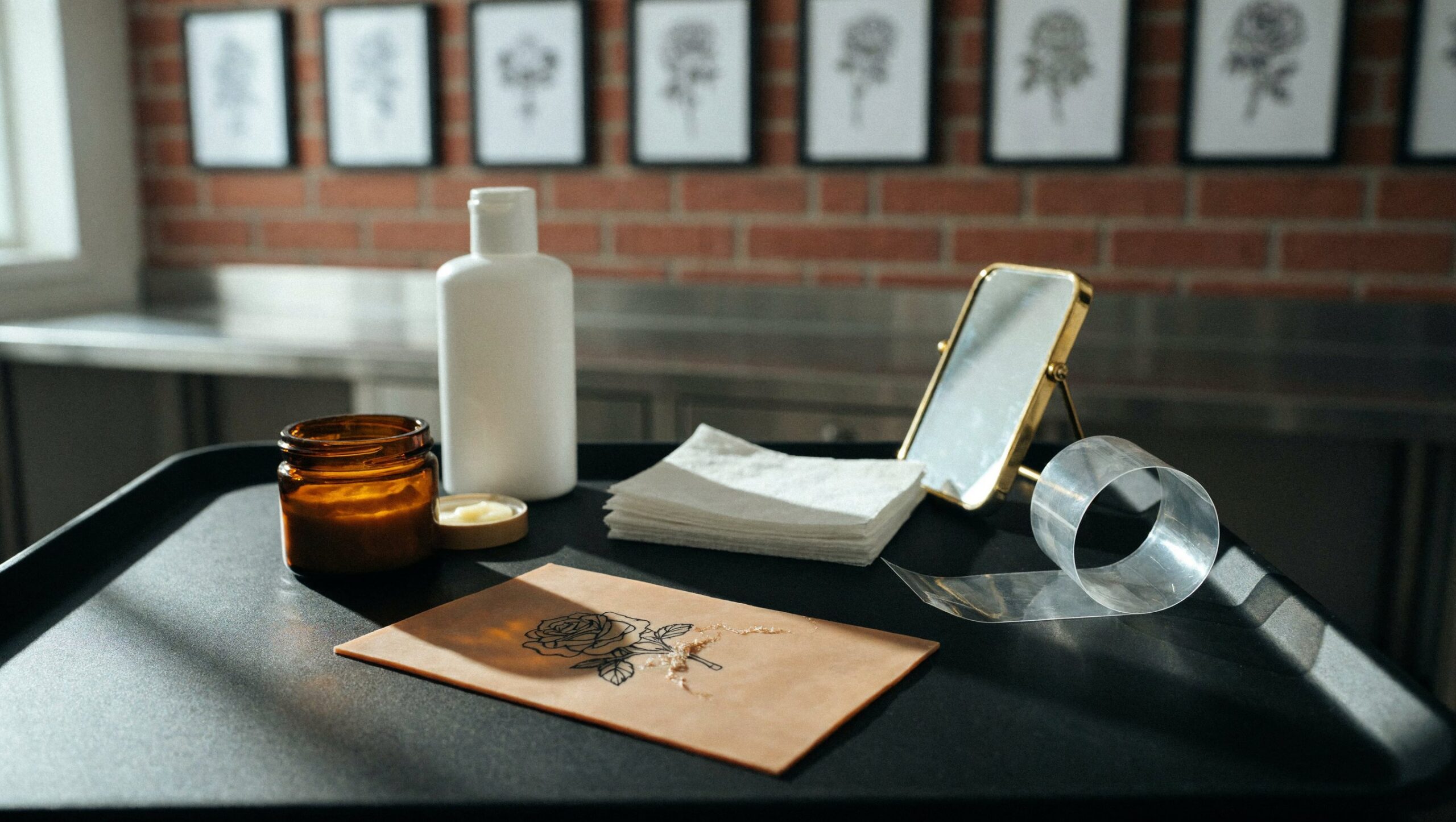
Yes. A thin, light scab is a normal part of healing for many tattoos. The needle leaves tiny wounds, and the fluid that seeps out in the first days dries into a protective layer, as Saniderm’s aftercare guide explains. Some tattoos barely scab at all, and that’s normal too.
Think of a scraped knee, where the crust that forms isn’t damage but the cover your body builds while new skin grows underneath. A tattoo heals the same way, which is why our aftercare instructions tell you to leave scabs alone so they fall off on their own.
What matters is the type of scab. Light scabbing looks like a thin, slightly shiny film that may carry a tint of your ink. Heavy scabbing is thick, raised and hard, and it can crack when you move. The first is expected, while the second usually has a cause you can fix and sometimes comes with signs that need a closer look.
When a Scab Is Not Normal: What Texas Aftercare Rules Say
In short: Texas aftercare rules say to get checked at the first sign of infection, not after a week or two of waiting.
In Texas, you don’t wait out a scab that shows signs of infection. State rules require everyone who gets tattooed to receive written aftercare. It must tell you to consult a health care practitioner at the first sign of infection or an allergic reaction. That’s a firmer line than the common advice to give a rough-looking tattoo a week or two and see if it clears up.
Watch for these signs around a scab, drawn from U.S. Food and Drug Administration (FDA) and Saniderm guidance:
- Redness, swelling or warmth that builds after the first few days instead of easing
- Pus or thick yellow or green drainage
- A rash of red, raised bumps near the tattoo, which can point to an allergic reaction
- Skin that turns hard around the scab
- Fever, chills, shaking or sweats
If you notice any of these, see a doctor first. If a provider diagnoses an infection or reaction, the Texas rule says to report it to your artist. The report also goes to the Texas Department of State Health Services (DSHS) at 1-888-839-6676. Telling your artist lets them check the ink and supplies used, which the FDA encourages. Our own aftercare sheet carries the same instruction, and you can reach either studio at (512) 806-1095.
Most scabs are the harmless kind, though, and the difference is easy to spot.
Light Scabbing vs Heavy Tattoo Scabbing
In short: Light scabs are thin and low risk. Heavy scabs are thick, can crack or snag, and need extra care.
Saniderm’s guide puts scab formation at a few days to a week after your session. Use this quick check to see which kind you have.
| What to check | Light scabbing | Heavy scabbing |
|---|---|---|
| How it looks | Thin film, flat or slightly raised, may carry an ink tint | Thick, raised crust that can crack |
| How it feels | Tight or itchy, little or no pain | Stiff, pulls when you move |
| Main risk | Low if left alone | Can snag on clothes and tear off with ink |
| What to do | Keep up your aftercare and let it flake | Cut friction, keep moisture thin, watch for warning signs |
A heavy scab on its own isn’t an infection, the same guide notes. It needs more care, mainly loose clothing and no picking. A thick scab that rips away early can leave a light patch in the design. It only becomes a doctor issue when it comes with the warning signs listed above.
Why Some Tattoos Scab More Than Others
In short: Heavy scabs usually trace back to dry skin, too much ointment, friction, or sun and soaking.
Most heavy scabs trace back to one of four things, and you can fix each of them.
The skin dries out. Long gaps between washing and a thin coat of aftercare let the surface go tight and crusty. That’s how a light scab on a tattoo turns thick.
Too much ointment. Saniderm warns that a heavy coat makes scabs swell and soften so they lift before the skin is ready, and larger pieces are more prone to it.
Friction. Tight sleeves, waistbands and bedding rub at scabs all day. Skip anything that might stick to the tattoo, as Mayo Clinic advises.
Sun and soaking. Texas aftercare calls for minimal sun and no swimming for at least two weeks.
Some tattoos are healed under a clear medical bandage, which its maker says may help reduce scabbing. Our guide to Saniderm vs. traditional healing covers when each method fits.
How Long Does a Tattoo Scab For?
In short: Scabs form within a few days to a week and are mostly gone in about two weeks.
Once scabs form, most flake away on their own before the skin finishes healing. Mayo Clinic puts that at about two weeks for most tattoos. Get tattooed on a Saturday, and you might see light scabs by midweek and smoother skin about two weeks later.
Thick scabs can hang on longer. That’s normal as long as they stay dry and free of the warning signs above.
Your care changes along the way too. Our routine uses a thin layer of aftercare ointment for the first 7 to 10 days. After that, you switch to plain unscented lotion until the skin is fully healed. For what happens after the scabs, including peeling and itching, see our full healing timeline.
Should I Moisturize a Scabbing Tattoo?
In short: Yes, in a thin layer. Too little lets scabs crack, and too much makes them soften and lift early.
Yes, keep moisturizing, but keep it thin. A dry scab can crack and pull, while too much product makes scabs swell and lift before the skin underneath is ready. Mayo Clinic also recommends a mild moisturizer several times a day while a tattoo heals.
Here’s the routine we give everyone who sits in our chairs, done 4 to 5 times a day during the ointment phase:
- Wash your hands with soap and water.
- Gently wash the tattoo with soap and lukewarm water.
- Rinse off all the soap with cool water.
- Pat the area dry with a clean towel.
- Apply a thin, even layer of the aftercare we recommend.
Aim for the middle ground. Skin that looks dull and tight needs a touch more, and a scab that turns soft, swollen or gummy means you’re using too much. Ease off the amount, not the routine.
You’ll find the full list of do’s and don’ts in our tattoo aftercare instructions.
Will My Tattoo Be Ruined If It Scabs?
In short: No. A scab that falls off on its own leaves the ink in place. Pulling it off early is the risk.
No. A scab that falls off on its own leaves the ink where it belongs. The real risk is a scab that comes off early, whether you pick it or it snags on a shirt. An early pull can take ink with it or blur the design.
If a scab tore off before it was ready, don’t try to fix the spot yourself. Wash it gently, keep up your routine and let it heal.
Then bring it up at your checkup. We suggest coming in 2 to 4 weeks after your session so an artist can look at how the tattoo settled. If a spot needs work, touch-ups happen between 30 and 90 days after the tattoo.
A scab is a cover over your tattoo, and it only causes trouble when it leaves too soon.
Frequently Asked Questions
In short: Six quick answers on peeling, showering, itching, sun and care after the scabs fall off.
Is it normal for tattoos to scab?
Yes. Many new tattoos form a thin scab in the first week as the skin seals itself, and some barely scab at all. Thick, cracking scabs are the ones that need extra care.
What’s the difference between scabbing and peeling?
A scab is dried fluid that hardens over the tattoo in the first days of healing. Peeling comes after, when thin flakes of the top layer of skin come off, a lot like a mild sunburn.
Can I shower with a scabbing tattoo?
Yes. A quick shower is fine. Skip baths, pools and hot tubs until it heals, since soaking softens scabs and can lift them early.
Can I scratch a scabbing tattoo if it itches?
No. Picking or scratching can pull a scab off before it’s ready and take ink with it. Leave scabs alone and let them fall off on their own, even when the itch gets annoying.
Does the Texas sun affect a scabbing tattoo?
Yes. Keep the tattoo out of direct sun while it heals, and cover it with loose clothing when you’re outside. Hold off on tanning the area for 8 weeks.
How do I protect my tattoo after the scabs are gone?
Once the skin has healed, the American Academy of Dermatology recommends a broad-spectrum, water-resistant sunscreen with a sun protection factor (SPF) of 30 or higher, since ultraviolet (UV) light can fade some tattoo inks. Stay out of tanning beds and away from sunlamps.
A little scabbing is one of the most common parts of healing new ink, and our artists are a phone call away if something looks off. When you’re ready for your next piece, request a tattoo quote and we’ll walk you through aftercare from day one.
Definition Bank
| Term | Meaning |
|---|---|
| Tattoo scab | A dried layer that forms over the tattooed skin while new skin grows underneath. |
| Light scabbing | A thin, flat or slightly raised film, sometimes tinted with ink, with little or no pain. |
| Heavy scabbing | A thick, raised crust that can crack, pull when you move or snag on fabric. |
| Ointment phase | The first 7 to 10 days, when a thin layer of aftercare ointment goes on after each wash. |
| Unscented lotion | Plain, fragrance-free hand lotion used after the ointment phase until the skin is healed. |
| Health care practitioner | A licensed provider, such as a doctor or nurse practitioner, who can diagnose an infection or reaction. |
| Allergic reaction | The body’s response to something in the ink, often a rash of red, raised bumps near the tattoo. |
| Infection | Germs growing in the healing skin, with signs like spreading redness, pus, hard skin or fever. |
| Texas DSHS | The Texas Department of State Health Services, the state agency that licenses tattoo studios and takes reaction reports. |
| 25 Tex. Admin. Code §229.408 | The Texas rule that sets what the written aftercare for every new tattoo must include. |
| Saniderm | A clear, breathable medical bandage some artists use to heal a new tattoo. |
| Touch-up | A follow-up session to fill a spot that healed light. |
Quick Facts
Platinum Ink Tattoo & Body Piercing
| Property | Value |
|---|---|
| Type | Tattoo and body piercing studio |
| Founded | 2002, Austin, Texas |
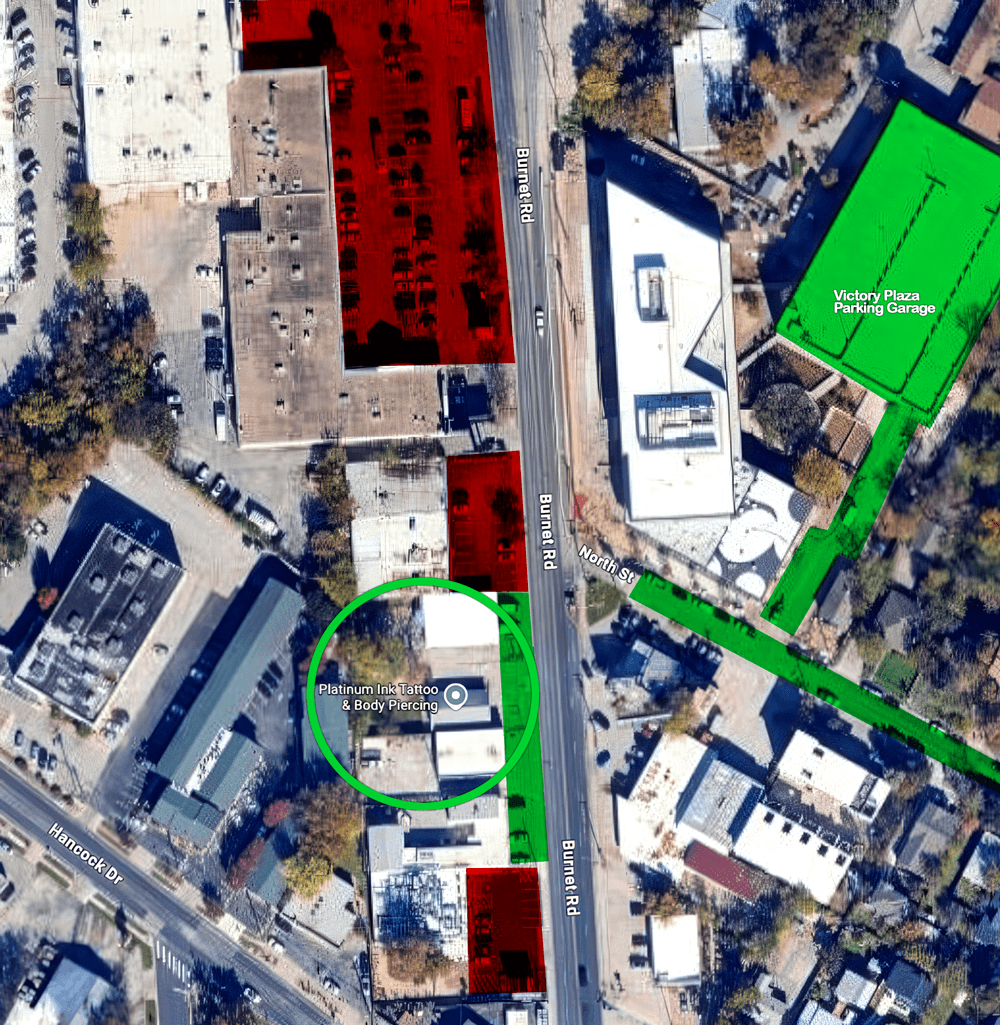
| Locations | 5128 Burnet Rd, Austin, TX 78756; 1515 S. IH35, Austin, TX 78741 |
| Phone | (512) 806-1095 |
| Services | Custom and walk-in tattoos, cover-ups, body piercing, jewelry, gift cards |
25 Tex. Admin. Code §229.408, Care of the New Tattoo
| Property | Value |
|---|---|
| Issued by | Texas Department of State Health Services |
| Requires | Oral and written aftercare for every person tattooed |
| Sun and swimming | Minimize sun and discourage swimming for at least two weeks |
| Infection or reaction | Consult a health care practitioner at the first sign |
| Reporting | Diagnosed reactions go to the artist and to DSHS at 1-888-839-6676 |
| Last amended | Effective January 1, 2005 |
Platinum Ink tattoo aftercare routine
| Property | Value |
|---|---|
| Steps | Wash hands, wash tattoo with soap and lukewarm water, rinse with cool water, pat dry, thin layer of aftercare |
| Frequency | 4 to 5 times a day for the first 7 to 10 days |
| After that | Plain unscented lotion until fully healed |
| Avoid | Re-bandaging, picking or scratching, soaking, sun for 2 weeks, tanning for 8 weeks |
| Follow-up | Checkup at 2 to 4 weeks; touch-ups between 30 and 90 days |
Sources
- Saniderm. What to Do About Tattoo Scabbing? (read October 27, 2026).
- Texas Administrative Code. 25 Tex. Admin. Code §229.408, Care of the New Tattoo and/or Body Piercing (Cornell Legal Information Institute) (amended effective January 1, 2005).
- Texas Department of State Health Services. Tattoo After Care Instructions, sample form (revised October 12, 2006).
- Mayo Clinic. Tattoos: Understand risks and precautions (March 2, 2024).
- Platinum Ink Tattoo & Body Piercing. Tattoo Aftercare Instructions (read October 27, 2026).
- U.S. Food and Drug Administration. Think Before You Ink: Tattoo Safety (content current as of December 17, 2024).
- American Academy of Dermatology. Caring for tattooed skin (read October 27, 2026).