Introduction to What is Tattoo Ink Made of
Tattoo ink is one of the most important parts of the entire tattoo process, but it is also one of the least understood. Most people think of it as a single product, something simple that comes out of a bottle and goes into the skin. In reality, tattoo ink is a carefully engineered mixture designed to move through the skin in a controlled way, settle evenly, and maintain its appearance long after the tattoo has healed. If you are putting something into your skin permanently, it makes sense to understand what it actually is. Tattoo ink is not just color. It is a combination of solid particles and liquid components working together to create a stable, usable material. The way those components are sourced, processed, and handled plays a direct role in how your tattoo looks, how it heals, and how it holds up over time. This guide breaks down exactly what tattoo ink is made of, how it is produced, and why those details matter more than most people realize.
What is Tattoo Ink Made of?
At its most basic level, tattoo ink is made of two core components: pigment and a carrier solution. Every ink your artist uses, regardless of whether it is black, grey, or color, follows this same structure. The difference between inks comes down to the type of pigment being used, how refined it is, and how well it has been formulated into a stable mixture. While that sounds simple, the balance between pigment and carrier is what determines how the ink performs. Too thick, and it will not flow properly through the machine or settle evenly in the skin. Too thin, and it may not deposit enough pigment to hold strong color. Professional tattoo ink is formulated to hit that balance consistently, which is why modern shops rely on pre-made inks rather than trying to create that balance manually during an appointment.
Tattoo Pigment: The Foundation of Color
Pigment is the solid material that gives tattoo ink its color, and it is the part that actually remains in your skin after the tattoo heals. Before it becomes part of tattoo ink, pigment exists as a fine powder made up of extremely small particles. These particles are what get deposited into the dermis layer of the skin and create the visible design. Different types of pigments are used depending on the color being produced. Black ink is typically made from carbon-based pigments, which are known for their strong saturation and long-term stability. Brighter colors such as reds, blues, and yellows are usually created using synthetic organic pigments that are engineered for vibrancy and consistency. Some inks may also use mineral-based pigments for certain tones or specialty applications. What matters most is not just the source of the pigment, but how consistent it is. Particle size plays a major role in how the ink behaves. If pigment particles are uneven or too large, the ink can go into the skin inconsistently, which can affect saturation and healing. High-quality inks use pigments that are refined to a uniform size, which helps ensure smoother application and more predictable results.
Where Tattoo Pigment Comes From
One of the biggest misconceptions is that tattoo artists or even tattoo ink brands are creating pigment from scratch. In most cases, that is not how the process works. Tattoo pigments are typically sourced from specialized manufacturers that produce high-quality pigments for a range of industries, including cosmetics, coatings, and other applications that require consistent color and stability. Tattoo ink companies then take those pigments and focus on turning them into usable ink. This involves selecting the right pigments, refining them further if needed, and blending them into a carrier solution that allows them to be applied safely and effectively into the skin. This separation between pigment production and ink formulation is an important part of how modern tattooing maintains consistency and quality. Understanding this helps explain why professional tattooing has moved away from using raw materials. The focus is no longer on creating pigment, but on creating a reliable, controlled final product that performs the same way every time it is used.
The Carrier Solution: What Makes Ink Functional
Pigment alone cannot be used for tattooing. It needs a liquid base that allows it to move through the tattoo machine and into the skin. This is where the carrier solution comes in, and it plays a much bigger role than most people realize. Carrier solutions are typically made up of a combination of distilled water, glycerin, and alcohol or witch hazel. Each of these ingredients serves a specific purpose. Distilled water helps control the overall consistency of the ink, ensuring it is not too thick or too thin. Glycerin adds viscosity, which helps keep the pigment evenly suspended in the solution instead of settling at the bottom. Alcohol or witch hazel helps with flow and also contributes to keeping the mixture clean and stable. The carrier does more than just hold the pigment. It directly affects how the ink moves, how it enters the skin, and how evenly it deposits. A well-balanced carrier allows for smoother application, better control during the tattoo process, and more even healing once the tattoo is complete.
How Tattoo Ink is Made
Modern tattoo ink is produced through a controlled and intentional process designed to eliminate inconsistency and reduce risk. It is not something that is casually mixed or adjusted during a tattoo appointment. Instead, it is created in environments where each step can be carefully managed. The process begins with sourcing pigment that meets specific standards for consistency and quality. That pigment is then refined to ensure uniform particle size, which is critical for smooth application. Once refined, the pigment is blended with a carrier solution in precise ratios. From there, the mixture is processed to ensure the pigment is evenly dispersed throughout the liquid, preventing clumping or separation. After the ink is properly mixed, it is sterilized and bottled under controlled conditions. This ensures that the final product is clean, stable, and ready to be used safely. The goal of this entire process is to create an ink that performs consistently from one bottle to the next, giving artists a reliable material to work with.
Do Tattoo Artists Use One Ink or Multiple?
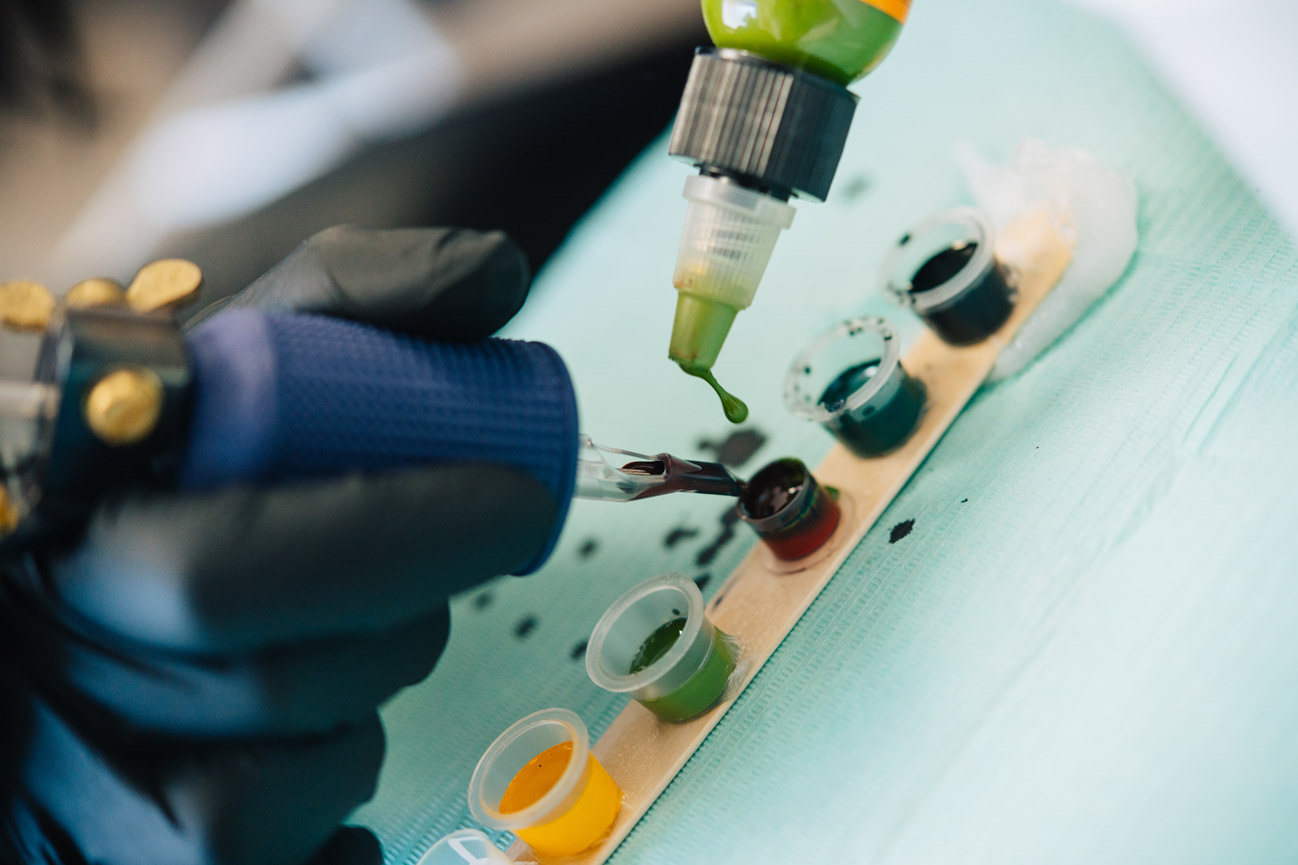
Tattooing is not done with a single ink, even when the final result looks simple. Artists are almost always working with multiple inks at once, building a tattoo using a range of tones and colors to create depth and balance. For color tattoos, each color is its own ink with its own pigment formulation. Artists layer these colors and blend them where needed to create smooth transitions and dimension within the design. What looks like a single shade from a distance is often built using multiple passes and subtle variations. Black and grey tattoos also rely on variation. Instead of using one solid black, artists typically work with different strengths of black ink. These variations are often created by adjusting the concentration of pigment, allowing for darker areas, mid-tones, and softer shading. This approach creates contrast and depth, which is what gives black and grey tattoos their finished look. Thinking of tattooing as working with a palette rather than a single ink gives a more accurate picture of how the process actually works.
Why Pre-Mixed Tattoo Ink Is the Standard
In earlier stages of tattooing, some artists mixed their own inks using dry pigment and liquid carriers. While that was once more common, it is not the standard in modern professional shops. Today, most artists rely on pre-dispersed tattoo ink, which means the pigment has already been evenly mixed and stabilized within the carrier solution. This shift happened because it offers better consistency and safety. Pre-mixed ink removes the guesswork from the process, ensuring that the pigment is evenly distributed and the mixture is properly balanced. It also reduces the risk of contamination and makes it easier to maintain consistent results across different tattoos. Using pre-formulated ink allows artists to focus entirely on technique and execution, rather than trying to manage the chemistry of the ink during an appointment.
Are Tattoo Ink Ingredients Safe?
Tattoo ink is designed to be used in the skin, but like any product, its quality depends on how it is made and handled. Reputable ink manufacturers focus on controlled production, consistent formulations, and clean processing environments to create inks that perform reliably. However, not all ink is created at the same standard. Lower-quality inks can introduce issues such as uneven color, inconsistent healing, or increased irritation. This is why professional tattoo shops are selective about the products they use and stick with brands they trust. It is also important to understand that the ink is only one part of the equation. The artist’s technique and the shop’s overall standards play just as big of a role in how the tattoo heals and how it looks over time.
How Ink Quality Affects Your Tattoo
The quality of tattoo ink has a direct impact on both the immediate result and the long-term appearance of your tattoo. High-quality ink allows for smoother application, stronger saturation, and more even healing. It holds its color better over time and is less likely to fade unevenly. Lower-quality ink, on the other hand, can lead to patchy areas, dull color, and a less consistent overall look. These differences may not always be obvious right away, but they become more noticeable as the tattoo ages. Because of this, ink quality is one of the details that separates a well-executed tattoo from one that does not hold up as well over time.
The Bottom Line
Tattoo ink is not just a single substance. It is a formulated system made from pigment and carrier solutions, designed to work together to create a stable, reliable material for tattooing. The pigment provides the color and starts as a fine powder, while the carrier turns that pigment into a usable liquid that can move through the skin properly. When you get tattooed, your artist is not using one ink. They are using a combination of pigments, tones, and techniques to build the final result. The quality of those materials, along with the skill of the artist, determines how the tattoo looks and how it holds up over time.
Final Thoughts: What is Tattoo Ink Made of
Understanding what tattoo ink is made of gives you a better sense of how much precision goes into a quality tattoo. It is not just about the design. It is about the materials, the process, and the level of control behind every step. At Platinum Ink, that level of detail matters. From the ink being used to the way it is applied, everything is chosen with consistency, safety, and long-term results in mind. When those standards are in place, it shows in the final tattoo and how it looks years down the line.